The Outfitter Brief
News, Insights, and Advocacy from America Outdoors
August 19, 2026
ORGANIZATIONAL UPDATES
Your Business Deserves a Voice.
The decisions being made in Washington and across our public lands directly affect your access, permits, costs, and ability to operate. America Outdoors is there making sure outfitters have a seat at the table.
And advocacy is only part of the value. AO membership connects you with industry-specific resources, business savings, education, and a nationwide community of outfitters who understand what it takes to run an outdoor recreation business.
If you haven’t renewed for 2026–2027, now is the time.
And if you’re not an AO member yet, we’d love to have you join us.
Protect your business. Strengthen the industry. Be part of America Outdoors.
Registration Opens Soo n!
n!
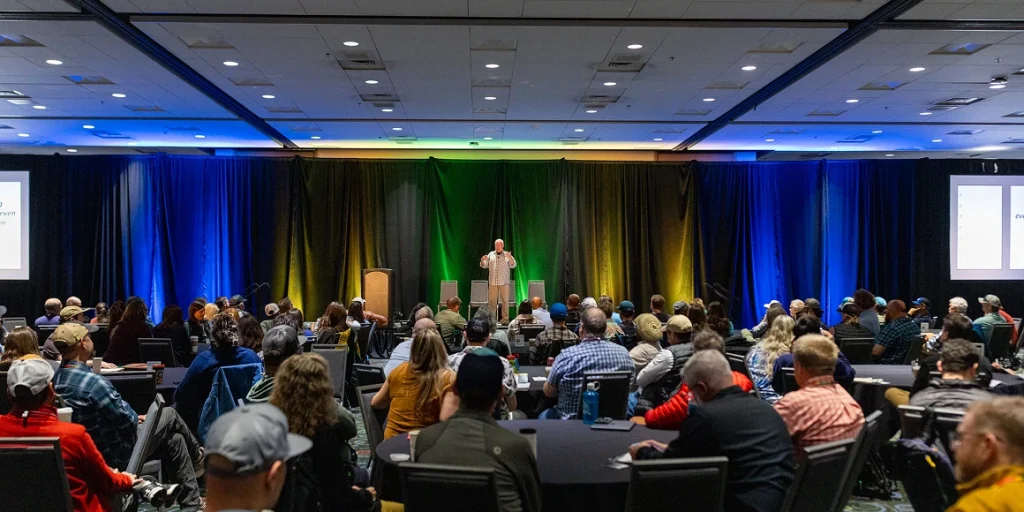
Four days. Hundreds of industry connections. Ideas you can put to work as soon as you get home. The America Outdoors Conference & Outfitter Expo brings the outfitting industry together in Oklahoma City, December 8–11, for practical education, new business solutions, and the kind of conversations that only happen when outfitters from across the country are in one place.
Connect with people who understand your challenges, learn from industry experts and fellow operators, and discover new products and partners in the Outfitter Expo. AO members receive discounted conference registration—one more way membership delivers value.
Registration opens soon, so start making plans to join us in OKC.
Learn more about the OKC Conference

Please join us in welcoming Cobber to America Outdoors!
Built by tour operators for tour operators, Cobber understands the day-to-day challenges of running an outdoor adventure business. Their reservation and distribution platform helps operators streamline operations, grow direct bookings, connect with distribution partners, manage seasonal demand, and spend less time on admin.
We’re excited to have Cobber as part of the AO community and look forward to connecting our members with another resource designed specifically to help tourism businesses grow.
Learn more at www.cobber.one
FEDERAL LAND MANAGEMENT

FOREST SERVICE
USDA Proposes Rescinding the 2001 Roadless Rule.
On August 18, Agriculture Secretary Brooke Rollins announced the Forest Service has filed a proposed rule to rescind the 2001 Roadless Area Conservation Rule in its entirety, along with a draft environmental impact statement published in the Federal Register the same day. The rule currently restricts road construction, road reconstruction, and timber harvest on more than 44 million acres of the 193-million-acre National Forest System.
The rescission removes the rule’s national designation rather than replacing it with a new mandate. As proposed, the rescission does not itself authorize timber cutting or road building. It sends every roadless-area decision back to forest-level land management plans, where Forest Service Chief Tom Schultz says local line officers, states, tribes, and communities carry the weight the blanket rule used to. USDA’s stated rationale is wildfire risk. The agency’s figures: more than 40% of inventoried roadless areas, concentrated in the West, carry high or very high wildfire hazard potential; only 5% of those acres have received hazardous fuels treatment since 2014; and more than 11.3 million roadless acres already sit near existing roads.
The proposal covers ten Western states—Alaska, Arizona, California, Montana, Nevada, New Mexico, Oregon, Utah, Washington, and Wyoming. Colorado and Idaho are excluded because each already operates under its own state-specific roadless rule, adopted separately from the 2001 national rule and unaffected by this action. Excluding Colorado and Idaho, these ten states hold more than 95% of the remaining inventoried roadless acreage nationwide. Roadless areas aren’t limited to the West, though: USFS inventories show acreage in roughly 26 other states plus Puerto Rico (38 states total), mostly in the East, Midwest, and South. The largest are in Virginia (394,000 acres), North Dakota (266,000 acres), New Hampshire (235,000 acres), West Virginia (202,000 acres), and North Carolina (172,000 acres), with smaller totals in Arkansas, Tennessee, South Dakota, Wisconsin, Minnesota, Georgia, and Florida, among others.
AO’s position: this is round two of an issue we’ve already gone on record about. We filed comments on the original scoping notice (Docket FS-2025-0001) last September, built on a five-part framework: retain national safeguards on intact roadless landscapes; allow only targeted, locally justified exceptions for wildfire mitigation, community protection, or necessary outfitter access; coordinate with permit holders before altering access; prioritize investment in existing infrastructure over new road-building; and extend comment windows with an economic-impact analysis. Those concerns are already on the record with the Forest Service. We will be filing comments again on this proposed rule and draft EIS, and we’re putting together comment guidance for members—possibly a template again, as we did last fall—for anyone who wants to weigh in individually.
How we got here, in brief:
- June 2025 — USDA announces intent to rescind the 2001 Roadless Rule.
- August 2025 — Forest Service opens the first public comment period (scoping).
- September 2025 — Scoping period draws 600,000+ comments; AO files its formal comment letter.
- August 2026 — Forest Service files the actual proposed rule and draft EIS, opening this second, more detailed comment period.
What to do: public comments on the proposed rule and draft EIS are due by midnight September 21 through Regulations.gov, and forest-specific detail becomes available August 19 on the Forest Service’s Roadless Areas webpage. If you operate in one of the ten covered states and your permit area, access route, or trailhead sits inside an inventoried roadless area—a lot of Western backcountry, hunting, and river operations do—pull up your forest’s draft EIS section before you comment, and watch for forest-plan amendments once the national designation is gone. AO is also gauging member interest in a town hall ahead of the comment deadline—reach out to us if you’d like one.
Source: USDA/Forest Service news release, Aug. 18, 2026
— • — • —
USFS Special Use Fee Update.
A number of you have asked where the special use fee changes landed. The Forest Service has formally withdrawn them.
The April 28 directives (amendment series -2026-1) implementing EXPLORE Act Title III set up an election between a flat $6 per service day and 3% of adjusted gross receipts, whichever exceeded the applicable minimum, with a short-stop option for trips of two or fewer service days on National Forest System land. That election structure replaced the graduated client-day-charge schedule outfitters had been billed under for years.
Those directives no longer exist. Amendment series -2026-2, approved July 29 and effective August 12, explicitly supersedes the April 28 versions in FSH 2709.11 and FSM 2700. For the 2026 season, permits are billed under the prior (2023-03) structure: the graduated client-day fee schedule based on average client-day charge (as applicable), or 3% of AGR, with the flat-fee brackets for temporary-use permits and the off-NFS-lands reductions restored as they were. The clauses written specifically for the April 28 election structure came out of FSH 2709.11 chapter 50.
On August 13, some Forests sent their outfitter and guide permit holders letters implementing the national rescission for 2026 billing, listing three billing-method options and noting that the agency is developing an alternative fee structure it is targeting for early January 2027. That January date is the agency’s own stated target in a field-level letter, not a date confirmed in directive text.
— • — • —
Directives Modernization (RIN 0596-AD74)
The proposal to reclassify Forest Service Handbooks as non-binding advisory guidance closed July 31 with more than 5,600 comments on the record. AOA filed alongside fifteen state and national outfitter and guide associations, asking the agency to move nine specific FSH 2709.11 and 2709.14 provisions into the Code of Federal Regulations—the priority-use renewal standard, the fee structure, core definitions like “priority use” and “service day,” the five-year allocation review, and the performance-review benchmark that gates renewal. There is no further comment window. We will read the final rule the day it publishes and tell you which of the nine the agency moved into the CFR.
— • — • —
USFS Objection Process Rewrite (36 CFR Part 218)
The Forest Service proposed a rewrite of 36 CFR Part 218 on February 6 (91 FR 5387, RIN 0596-AD69). Comments closed March 9 with 2,513 on the record.
The proposal cuts the overall objection timeline by more than half. Comment periods drop from 30 days to 10 on an environmental assessment and from 45 to 20 on an environmental impact statement. The window to file an objection drops from 45 days to 10 following a draft FONSI or 20 following a draft ROD. The responsible official’s response window drops from 45 days, with 30-day extensions available, to 15 or 20 days with extensions eliminated. Objections would be capped at 15 pages for an EA and 30 pages for an EIS, and responses at five pages.
Part 218 predecisional review covers special-use authorization and recreation infrastructure decisions, so a shorter window speeds up projects you want built and compresses the time you have to challenge a district decision you don’t. If your forest is working through a project that touches your permit, assume the objection window under a final rule will be days rather than weeks and line up your comments before the draft decision posts.
— • — • —
Two Recreation RACs meet with fee items on the agenda.
The Olympic Peninsula RAC (WA) meets August 19 and the Deschutes-Ochoco RAC (OR) meets September 3. Both take up Title II funding and recreation fee recommendations under the Secure Rural Schools Act and the Federal Lands Recreation Enhancement Act. If you operate on either forest, these committees make the recommendations that set fee and Title II spending direction on your ground, and both meetings are open to attend or comment.
BUREAU OF LAND MANAGMENT
The wilderness dockets closed August 14, and AOA filed on all of them.
Four BLM dockets, two NPS dockets, and two FWS dockets closed on the same day, and AOA filed on every one as part of the Outfitter and Guide Coalition. What the Coalition asked for on each is broken out in the section below.
— • — • —
SRP applications run through RAPTOR now.
Since February 2, BLM has processed all Special Recreation Permit applications through updated EXPLORE Act Title III permit categories submitted electronically through RAPTOR, with interim guidance published May 18. Local requirements still vary by field office and land use plan. Before your renewal, confirm with your field office that you are using the current categories rather than reusing last season’s paperwork.
— • — • —
Montana: BLM revoked American Prairie’s bison grazing permits.
The organization has run a bison harvest since 2018 as a herd management tool, drawing roughly 5,000 applicants a year for 20 to 25 tags. BLM’s permit revocation cancelled it. Whatever your view of American Prairie, a grazing authorization decision eliminated a hunting opportunity on public land without any separate recreation decision or public process.
NATIONAL PARK SERVICE
Powered micromobility is now prohibited by default.
NPS published a final rule August 12 creating a regulatory category for e-scooters, hoverboards, Segways, and similar devices, separate from motor vehicles and e-bikes. It takes effect September 11. The default is now prohibition—these devices are barred on park roads, trails, and sidewalks unless a superintendent affirmatively designates a location. Existing paved and gravel surfaces can be designated administratively; undeveloped surfaces require formal rulemaking. Possession—not just operation—is banned in designated wilderness.
Commercial operators need written authorization through a concession contract or CUA, plus compliance with equipment maintenance, battery handling, and incident reporting requirements. If you run or rent these devices in a park unit, call your superintendent’s office before September 11 and get your authorization status in writing.
— • — • —
First State National Historical Park bike rule still open.
he proposed rule opening roughly 25 miles of trail in the Brandywine Valley unit to bicycle use (NPS-2026-0133) takes comment through September 28. Narrow, but if you run or are considering a bike-tour operation in that corridor, read it before the window closes.
FISH & WILDLIFE SERVICE
The largest refuge hunting and fishing expansion on record.
DOI finalized 1,488 new hunting and sport-fishing opportunities across 107 refuges and 4 national fish hatcheries in 32 states, with 14 refuges and 3 hatcheries open to hunting or fishing for the first time. More than 92 million acres—over 95% of the refuge system—are now available for hunting. The rule implements Secretarial Order 3447 and Director’s Order 233.
Some groups have raised refuge staffing and funding concerns relative to the expanded use, and a separate rescission of lead-ammunition and tackle phase-outs at nine refuges takes effect September 1. If you guide on refuge lands, confirm the station-specific regulations for each unit you use before you sell fall dates, because “open” at the system level does not tell you what the local station permit requires.
— • — • —
Two FWS windows: one closed, one still open.
The grizzly bear 4(d) rule comment period (FWS-R6-ES-2024-0186) closed August 17, and Ao submitted comments. The next step is the proposed rule itself. The Alaska big-game guide reporting survey renewal (FWS-R7-NWRS-2026-1156) stays open through September 14, and Alaska members with concerns should get them on the record and copy AO.
CUSTOMS & BORDER PROTECTION
Big Bend: construction paused, access protections unresolved
On August 16, Customs and Border Protection Commissioner Rodney Scott ordered a temporary halt to construction within Big Bend National Park while he conducts an on-site evaluation and meets with local stakeholders. The agency has not announced how long the pause will last, whether the project will be modified, or whether planned road, detection-technology, and vehicle-barrier work will proceed.
For river outfitters, the central issue remains dependable public and commercial access to Rio Grande put-ins, take-outs, and emergency egress points. Without written, site-specific commitments, operators cannot reliably plan 2027 trips, staffing, client deposits, or emergency procedures.
AOA’s Direct Advocacy. On August 7, AOA asked CBP, NPS, congressional leadership, and the Departments of Homeland Security and Interior to:
- Confirm that designated river access points will remain open to permitted and public use on their current terms.
- Consult permitted operators, county sheriffs, and NPS river staff before facilities are installed at access points.
- Require public access to be maintained or replaced in kind before further work proceeds under the BBT-4 and BBT-5 task orders.
- Defer work along this reach unless a site-specific security need supports it.
A keyed or discretionary gate system would not provide dependable access for the self-guided public, emergency response, or businesses that must commit to trip logistics well in advance. AOA is seeking an access arrangement that is public, reliable, and operationally workable.
What to do. If you operate in Big Bend or run trips that depend on these access points: First, stay engaged. Second, send us your specifics—which points you use, how many trips you run, what a closure costs. Specific operational details strengthen our advocacy with CBP, NPS, and congressional staff. If you operate nowhere near Texas, the precedent is still worth watching.
FEDERAL AGENCIES & FILINGS
WHAT AO FILED JUST LAST WEEK:
On August 14, AOA filed comments on eight related dockets at three agencies, joined on each by as many as twelve national, state, and regional outfitter and guide associations under the Outfitter and Guide Coalition banner. Co-signers across the set were the Colorado Outfitters Association, Colorado River Outfitters Association, Dude Ranchers’ Association, Idaho Outfitters and Guides Association, Montana Outfitters and Guides Association, Nevada Outfitters and Guides Association, New Mexico Council of Outfitters and Guides, Oregon Outfitters and Guides Association, Professional Outfitters and Guides of America, Utah Guides and Outfitters, Wild Rogue Outfitters Association, and Wyoming Outfitters and Guides Association.
BLM-2026-0067—Manual 6340, Management of Designated Wilderness Areas. Three issues. First, how BLM applies the Wilderness Act’s “extent necessary” test to commercial services, which is the provision that decides whether guided trips can operate in BLM wilderness at all. Second, that filming and still photography incidental to an already-authorized trip should not be treated as a separate commercial filming action requiring its own permit. Third, the Manual’s blanket bar on using categorical exclusions for routine commercial-service actions, which forces full analysis onto renewals that change nothing. Read the Comments
BLM-2026-0069—Manual 6330, Management of Wilderness Study Areas. The longest of the eight. The Coalition asked BLM to replace subjective non-impairment criteria with effects-based standards: delete the language stating that repeated short-term operations do not qualify as temporary use, and delete the “expectation or demand” criterion, which asks staff to speculate about what a permitted use might make the public want later rather than what it does to the ground. On the October 21, 1976 baseline, the letter asked BLM to identify what evidence establishes it, say how uncertainty is handled, and stop treating undocumented historical conditions as grounds for denying a non-impairing use. For renewals with no increase in service days, group size, season, facilities, or surface disturbance, it asked BLM to rely on the prior non-impairment determination and a Determination of NEPA Adequacy. It also asked for a published SRP processing schedule with a 60-day response target for complete applications, on the reasoning that delay denies access as effectively as denial does. On monitoring, it asked BLM to replace uniform monthly monitoring with a risk-based Limits of Acceptable Change approach, and to require training, standardized forms, and agency verification before volunteer observations feed into permit decisions. Read the Comments
BLM-2026-0068—Manual 6320, Lands With Wilderness Characteristics in Land Use Planning. Three requests: clarify the scope of §1.6.A.2.d(7) and what the planning record has to show before an area is managed for wilderness characteristics; confirm that outfitted and guided recreation counts as a resource use in that planning record rather than an afterthought; and retain the distinction drawn in §1.1 between lands with wilderness characteristics and designated wilderness. Read the Comments
BLM-2026-0034—Manual 6340 §1.6.C.13.f, PARC Climbing Guidance. Nine asks, and the most operationally specific of the set. Strike the categorical prohibition on new fixed anchors placed by permitted outfitters. Authorize anchor maintenance and safety placements through SRP terms rather than trip by trip. Keep a single commercial-services standard for guided climbing instead of a separate track. Treat the casual-use numbers as benchmarks rather than hard caps, and define what counts as a human-placed object. Keep voluntary notification voluntary. Recognize that guides make anchor decisions under exigent safety conditions, and revise the automatic removal rule accordingly. Say what maintenance means and confirm the treatment of non-motorized hand drills. Specify what the record must show before a legacy route is closed or an anchor removed. And confirm that exceeding casual use does not convert an anchor into a Section 4(c) prohibited installation. Read the Comments
NPS-2026-0100—Director’s Order #41, Wilderness Stewardship. Five requests. Anchor the §7.3 necessity and minimum-amount determinations on a presumption that an existing, authorized operation stays authorized. Establish a categorical exclusion pathway for renewing, minorly modifying, or reissuing an existing outfitter authorization. Clarify that filming or still photography merely incidental to an already-authorized activity needs no separate permit. State that a continuously authorized operation that predates a wilderness designation is governed by the §7.3 necessity standard. And direct that wilderness character baselines and Wilderness Stewardship Plans document existing authorized outfitted use, so it is on the books before capacity decisions get made. Read the Comments
NPS-2026-0101—Draft Wilderness Climbing Guidance, DO 41 §7.2 and RM 41 §7.1. Nine asks. Make Reference Manual 41 match Director’s Order 41 and replace the blanket permit requirement with a three-tier structure. Write maintenance and exigent-safety authority into CUA and concession terms. Say what one-for-one anchor maintenance actually requires. Remove the “last resort” standard for fixed anchors. Specify what a decision to close or remove a legacy route must show. Keep the exigent-circumstances provision and extend it to conditions short of a full emergency. Confirm that hand drilling does not by itself pull an anchor into minimum-requirements review. State the non-certification principle and give notice before removing anchors. And preserve park-level systems that already work rather than overriding them. Read the Comments
FWS-HQ-NWRS-2026-2575—Part 610, Wilderness Administration and Resource Stewardship (RFI). Five requests, offered as principles since the Service has not published revision text yet. Define the §2.12B “necessary for the public enjoyment of wilderness” standard and the §2.12E “fair” fee standard. Prioritize Wilderness Stewardship Plan updates at refuges with active commercial-service programs. Revise §2.12D and the §1.5D definition of commercial photography so incidental filming on an authorized trip is not swept in. Preserve and extend the ANILCA-based guiding and access authorities in Alaska, including confirming that §5.15 reaches licensed Alaska big-game guides’ client camps. And document existing authorized guiding in Wilderness Stewardship Plans. Read the Comments
FWS-HQ-NWRS-2026-1618—Draft Climbing Guidance, 610 FW 1 and 610 FW 2. Eight asks. Direct refuges to write anchor maintenance and exigent-safety authority into standard Special Use Permit conditions. Provide programmatic authorization once climbing has been found appropriate and compatible at a refuge, instead of re-litigating it per trip. Keep appropriateness and compatibility review tied to actual conditions at the refuge. Define “fixed anchor” by function and scale, and match the definition the other agencies use. Give the legacy-route provision independent effect. Make the de minimis determination operational rather than theoretical. State the non-certification principle and give notice before removing anchors. And let monitoring run in both directions, so refuges document what is working and not only what is failing. Read the Comments
Three themes run through all eight. Routine renewals of existing, unchanged authorizations should not require the same analysis as a new use. Anchor maintenance and safety placements belong in permit terms, not in trip-by-trip approvals. And the four agencies should use the same definitions for the same things, because a guide working a permit boundary between BLM wilderness and a park unit should not be operating under two different rulebooks for the same bolt.
FIRE, WATER, & CLOSURES
Colorado’s Pike-San Isabel National Forest reduced its Willow Fire closure August 10, though Mount Massive Wilderness trailheads and campgrounds remain affected through September 30, and the Aspen Acres Fire closure was reduced July 31, restoring limited trailhead access to Greenhorn Mountain Wilderness. BLM rescinded part of a Prineville District emergency closure on August 15. Orders are moving week to week. Check the current forest or district order the morning you run, not the week you book.
CONGRESS & LABOR
Good Neighbor Authority bill is parked. H.R. 7951, the Long-Term Good Neighbor Authority Act, would amend the Agricultural Act of 2014 and the EXPLORE Act to put GNA on a long-term footing instead of periodic reauthorization. It got a Federal Lands Subcommittee hearing March 26, alongside the Parkway Safety and Reinvestment Act, the American Battlefield Protection Program Amendments Act, and the Public Lands Access Restoration Act. Nothing since.
GNA is the authority behind a lot of the cross-boundary trail, road, and access restoration work outfitters depend on. With the bill stalled, GNA keeps running on the shorter reauthorization cycle it has now.
— • — • —
Legacy Restoration Fund expires September 30. That deadline is what will force House-Senate negotiation over H.R. 9250 and S. 1547, neither of which has seen floor action. Two pushes landed this month. ORR marked the Great American Outdoors Act’s sixth anniversary with a call for Congress to reauthorize and improve it, and Sen. Steve Daines published an op-ed with Pew pressing for passage of the America the Beautiful Act before the end of the year, citing 332 million park visits and $56.3 billion in gateway-community spending in 2024. If deferred maintenance on the roads, ramps, and campgrounds your trips run through is costing you, these are the bills to raise with your delegation this fall.
— • — • —
Senate ENR package still awaiting floor time. S. 2968 (Outdoor Americans with Disabilities Act) and S. 3785, the Senate companion to the House-passed Grand Canyon and Kaibab wildfire recovery bill, were both reported out of committee July 29. No floor vote is scheduled for either. No action item beyond awareness—AO will flag it if the calendar moves.
— • — • —
Bills that have not moved. The ORG Act (S. 4838), which would create the FLSA overtime exemption for outfitting and guiding employees, remains with the Senate HELP Committee with no committee action logged. DOL’s proposed rule restoring the 2021 five-factor independent contractor test (WHD-2026-0001) still has a closed comment period and no final rule. Neither has a new development to report this cycle. Keep your current contractor agreements documented to the standard in force today.
— • — • —
H-2B. The next real filing checkpoint is the September 15 supplemental petition deadline for the third FY2026 allocation, filed through the FLAG system.
INDUSTRY PULSE
A faster way to file a comment. onX has released a free Public Land Comment Hub that lets users file official comments with federal agencies on public-land dockets without working through Regulations.gov directly. Most of this year’s wilderness, climbing, fee, and travel-management dockets came and went in 30-day windows. If you have guides or repeat clients who would file site-specific comments when it takes five minutes instead of forty, this is a way to get them into the record.
— • — • —
Fishing and camping cross over more than most operators price for. OIA’s 2026 Special Report on Fishing, produced with the American Sportfishing Association, found camping is the largest crossover activity among fishing participants at 45%, up seven points since 2015, and that 78% of anglers say they camp when they fish. If you run fishing trips and do not currently package overnight or basecamp options, that number describes demand you are handing to someone else. It cuts the other way too—campground and basecamp operators with water nearby have a guided-fishing add-on sitting in their existing client list.
— • — • —
Colorado drought and disaster relief guide. AO published a resource guide for Colorado outfitters covering the financing and relief programs available after this year’s drought emergency, shortened seasons, closed river segments, and cancelled recreational flow releases. It also flags which drought programs are structurally closed to this industry so you do not spend a week on an ineligible application.
— • — • —
SBA Economic Injury Disaster Loan declarations are open. The statewide drought declaration (CO-20027) covers 52 Colorado counties, including most major commercial river corridors in the state, and runs through December 7. These are economic-injury loans—up to $2 million at 4% fixed for small businesses, terms to 30 years, with no payments or interest accrual for the first 12 months. You do not need physical damage to boats, buildings, or gear to qualify; documented revenue losses from low water may be enough. Verify eligibility and deadlines with SBA directly before relying on any figure.
— • — • —
Active AO Member Surveys
The Bears Ears and Grand Staircase-Escalante rapid assessment covers how monument boundary changes affect outfitters holding or seeking SRPs and concessions in southern Utah. The CDL and driver survey is at 38 responses and needs more before it is worth putting in front of FMCSA and the Hill—vehicle types, licensing requirements, driver barriers, business risk. Both are anonymous, and the results go into AO’s internal strategy, agency filings, and Hill meetings.
PARTNERSHIPS, PROGRAMS, & EVENTS
Forest Service Recreation and Access Working Group intake form is still taking projects. If you have a trail, access, river put-in, or campground project stuck behind a permitting or funding hurdle, the coalition intake form AO set up captures what the Forest Service actually needs to evaluate it: project type, estimated cost, funding status, Good Neighbor Authority eligibility, permits or NEPA already in hand, barriers to implementation, and how many user days it affects.
— • — • —
IMBA opened its trail-building playbook. IMBA launched a Trail Champion Certificate Program in August, built around its eight-step Trail Development Process—plan, fund, build, maintain, grow. If you are the operator who keeps getting asked to lead a local trail effort and does not know where to start, this pairs well with the Working Group intake form above.
— • — • —
SORP webinar August 27. The Society of Outdoor Recreation Professionals has opened registration for an introduction to the Outdoor Recreation Access and Participation Survey, with NASORLO and Auburn University. Worth an hour if you follow participation data or want to understand what states will be measuring.
— • — • —
Outdoor Retailer, Minneapolis, August 19–21. The rebuilt show runs with more than 275 exhibitors and 550 retail buyers, with an Education Day August 19 covering AI, buying behavior, and wearable tech. Nothing here touches permits, but if you buy gear at volume the show is back on the calendar.
WHAT’S NEXT
READ & WATCH
National Park Service Whizzes Ahead with E-Scooter Regs—E&E News on how the micromobility rule came together and what NPS is trying to get ahead of.
You Can Now Hoverboard Through National Parks—Sort Of—GearJunkie’s plain-language read on the same rule, useful if you need to explain the change to a client who asks.
Bipartisan Texans slam Big Bend border construction—All five border sheriffs and all fourteen border county judges in the Big Bend region are on record against the barrier work near the river access points outfitters use.
Outdoor enthusiasts have created a new app that lets people weigh in on public land policy—A short radio piece on the Public Land Comment Hub — onX, and on why the federal comment process loses people who genuinely want to participate.
American Prairie Bison Hunt Canceled: Who Gets to Determine What Happens On Public Lands?—OutdoorHub on the Montana grazing-permit revocation and the access question underneath it.
Interior announces the largest expansion of hunting and fishing opportunities in FWS history—The agency’s own release, with the station-by-station detail if you need to check a specific refuge.
IMBA Trail Champion Certificate Training—The eight-step process IMBA has used to get community trail projects from idea to ribbon cutting, now open to anyone.
ICYMI: Daines Op-Ed in The Washington Examiner: National parks are a gold mine. Congress has a chance to save them from crumbling, Senator Steve Daines / Washington Examiner
Outdoor Recreation Data–A clean, free dashboard that pulls together national-park visitation, BEA outdoor-recreation economic data, Recreation.gov bookings, FY2024 interagency visitation, and Great American Outdoors Act investments; useful for quick state, park, activity, and trend comparisons without digging through agency spreadsheets.

This issue alone covers eight dockets AO filed on, a federal fee structure that changed twice in four months, and another major comment deadline coming September 21.
Keeping up with it all is a full-time job, and making sure outfitters have a voice in it is ours.
Your AO membership puts dedicated advocacy behind your business, keeps you informed when policies change, and gives our industry a stronger voice when decisions are being made.
If you haven’t renewed for 2026–2027, now is the time. And if you’re not an AO member yet, join us.
Your membership strengthens the work, and makes sure outfitters have a seat at the table.