The Outfitter Brief
News, Insights, and Advocacy from America Outdoors
August 4, 2026
Organizational Updates

Renew Your Membership Today
Your 2026–2027 America Outdoors membership is ready to renew. If you haven’t renewed yet—or if you’ve never been a member—now is the perfect time to join.
While you’re focused on your business, AO is advocating for outfitters in Washington, protecting access, influencing policy, and delivering valuable member benefits that can save you more than the cost of your dues.
Watch the video to hear directly from longtime members about why they continue to invest in America Outdoors—and why your support matters now more than ever.
Please Welcome Tyler Spevacek, our new Operations & Events Manager
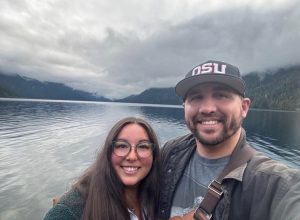
Tyler brings a wealth of experience in operations, logistics, and event management, with a career spanning collegiate athletics, large-scale events, workforce management, and organizational systems. He’s the kind of person who enjoys solving complex problems and making sure everything comes together behind the scenes.
Outside of work, Tyler and his wife are passionate outdoor enthusiasts working toward a goal of visiting all 63 U.S. National Parks. At home in Oregon, they’re joined on their adventures by two spirited huskies, Niko and Kyllo. (Also a cat.)
For Tyler, joining AO isn’t just a new job—it’s an opportunity to support and advocate for the outdoor recreation community he already loves.
We’re excited to have Tyler on the team. Please help us give him a warm America Outdoors welcome!
Don’t Miss the Trip Everyone Will Be Talking About. 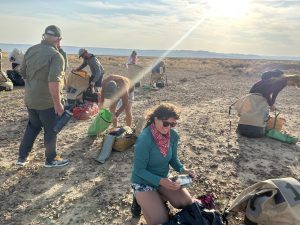
Step away from the daily grind and join fellow outfitters for an unforgettable week on Idaho’s legendary Main Salmon. With just a few spots left, this exclusive fundraising trip is your chance to reconnect with peers, build lasting relationships, and support the advocacy work that protects our industry. If you’ve been waiting for the right adventure this year, this is it—but seats won’t last long.

Registration Opens Soon!
The America Outdoors Conference & Outfitter Expo is where the outfitting industry comes together to learn, connect, and move forward. Join hundreds of outfitters, guides, and industry partners in Oklahoma City, December 8–11, for four days of practical education, meaningful networking, and conversations that will help strengthen your business and our industry. Don’t miss your chance to be part of the community that is shaping the future of outfitting.
Learn more about the OKC Conference
Recreation and Access Working Group | Project Intake Form
The Forest Service Recreation and Access Working Group is now accepting project proposals through a coalition intake form that AO set up. If you have a trail, access, river put-in, or campground project that could use agency attention and coordination, the form is structured to capture what the Forest Service actually needs: project type, estimated cost, funding status, whether it’s Good Neighbor Authority-eligible, permits or NEPA status already in hand, barriers to implementation, and whether the project directly supports commercial outfitters and how many user days it affects.
If you have a project in mind on your forest, or you’ve been stuck on a permitting or funding hurdle and want to see if the Working Group format fits, use the intake form here: Take the Survey Here.
Two [more] Member Surveys | Five Minutes Each
AO is running two short member surveys right now. Both are anonymous, and both feed directly into our agency conversations.
The first is a rapid assessment on how changes to Bears Ears and Grand Staircase-Escalante National Monument boundaries may affect commercial outfitters and guides who hold or are seeking Special Recreation Permits or concessions in southern Utah. Monument designation changes don’t automatically cancel permits, but they do trigger shifts in travel management, resource protection standards, and future planning that can change where and how you operate. The survey takes 5–7 minutes and covers permit status, activity types, near-term operational impacts, and willingness to engage in coordinated AO efforts. Take the survey here.
The second is on CDL and driver challenges. We have 33 responses so far, and the picture is already useful, but more data means a stronger case when we talk to FMCSA and the Hill about where the rules are actually breaking operations. The survey covers vehicle types, licensing requirements, driver barriers, and business risk. If you’ve struggled with CDL testing delays, passenger-endorsement shortages, state-level licensing friction, or hours-of-service compliance for multi-day trips, your specifics matter. Take the survey here.
Welcome Our Newest Commercial Member: Bungee Balm™
Joni Quintal is the Founder and Inventor of Bungee Balm™, an innovative, retractable lip balm holder designed to keep lip balm secure, accessible, and always within reach. Whether you’re kayaking, hiking, running, fishing, golfing, or cycling, Bungee Balm helps ensure you never lose your lip balm again. A lifelong outdoor enthusiast, former school principal, and current leadership coach, Joni created Bungee Balm after losing countless lip balms while cycling. She is passionate about developing practical gear that enhances outdoor adventures and looks forward to connecting with outfitters, guides, retailers, outdoor organizations, and schools.
Bungee Balm™ is a patented outdoor accessory that securely holds lip balm in a durable neoprene sleeve attached to a heavy-duty retractable reel. Designed for hiking, biking, paddling, skiing, running, fishing, camping, and everyday adventures, it clips easily to backpacks, PFDs, golf bags, bike handlebars, dog leashes, and more—keeping lip balm protected, accessible, and never lost. Bungee Balm also offers custom-branded products for outfitters, camps, retailers, universities, and organizations seeking practical promotional merchandise that people actually use.
Federal Land Management
Forest Service
AO filed comments on the Directives Modernization rule; the fight now shifts to the final rule. The Forest Service’s proposal to make the Forest Service Handbooks purely advisory (RIN 0596-AD74, 91 Fed. Reg. 39948) closed for comment July 31. AO, together with fifteen state and national outfitter and guide associations, filed a joint letter identifying specific FSH 2709.11 and 2709.14 provisions that need to move into the Code of Federal Regulations to stay enforceable, including the priority-use renewal standard, fee structures, core scope definitions like “priority use” and “service day,” the five-year allocation review, and the performance-review standard that gates renewal and reduction decisions.
Section 251.64(b) of Title 36, the regulation that governs renewal of your priority-use permit, doesn’t state the renewal standard itself. It points you to “applicable Forest Service directives.” If those directives become advisory guidance an employee can depart from without documenting why, the regulation is pointing you to a document that no longer binds anyone, which is the gap we asked the agency to close. There’s no more public comment window on this one; the agency’s response comes in the final rule, and we’ll tell you what it did or didn’t pick up. More on what specifically to watch for in AO Perspective below.
Sidebar: What came out of the Forest Service reorganization hearing
The House Agriculture Subcommittee on Forestry and Horticulture heard testimony from Chief Tom Schultz on July 22 on the agency’s plan to replace its nine regional offices with a 15-state-office model. Watch the full hearing here.
The new state offices will run leaner than what they replace, typically 8 to 10 staff versus the hundreds a regional office carries today. For permittees, that’s potentially a mixed bag: as previously editorialized on, state-level accountability could streamline some relationships, but it also risks thinning out the regional specialists who currently help forests work through complex policy, NEPA, and special-use questions tied to your permit.
Lawmakers pressed Schultz on the risk of losing institutional knowledge, citing past agency relocations that drove significant staff attrition. Schultz maintains the losses will be minimal and that the move puts resources closer to the forest level, though generalized skepticism on the committee ran high. We’re watching whether this ends up adding capacity on the ground or just costs the agency people who know how a specific forest and its permittees actually operate.
FICOR
AO filed comments on the Federal Interagency Council on Outdoor Recreation’s Section 133 recreation-data pilot framework. The 30-day comment period on FICOR’s implementation report for EXPLORE Act Section 133 closed July 29, and you can read AO’s comments here. This is the framework BLM, NPS, the Forest Service, Fish and Wildlife Service, NOAA marine sanctuaries, and the Army Corps will jointly use to measure recreation use they currently can’t count well, using mobile-device data, automated counters, game cameras, and permit records, so it touches every outfitter operating on any of that land or water, not just BLM permittees.
Our comments made one central point: outfitted use is the one thing agencies already measure with precision, through your permit and reporting records, while dispersed non-outfitted use is mostly guesswork. If a pilot can’t tell the difference between the two, outfitted use becomes the only lever an agency can see and regulate, even when it isn’t the main driver of crowding or resource impact at a site. We asked every pilot at a site with active commercial authorizations to use existing permit data as a calibration layer against the new tech, which costs the agencies nothing extra and gives them a real composition picture instead of just a bigger visitor count. We also flagged the Army Corps’ plan to rely on voluntary comment cards at marina and outfitter sites as falling well short of what the statute asks for. This is a data-methodology fight now, not a permitting fight, but the data from these pilots will eventually feed into the allocation and capacity decisions that do affect your permit.
Bureau of Land Management
Seven wilderness and climbing dockets across three agencies close August 14, two weeks from now. BLM’s four-docket wilderness review (Manual 6340, BLM-2026-0067; Manual 6330, BLM-2026-0069; Manual 6320, BLM-2026-0068; and the climbing-specific revision to Manual 6340, BLM-2026-0034) now runs alongside three companion dockets from NPS and FWS: NPS’s EXPLORE Act-mandated wilderness climbing guidance, NPS Director’s Order #41 wilderness stewardship review (NPS-2026-0100), an NPS wilderness administration RFI (NPS-2026-0101), and FWS climbing-in-wilderness guidance for refuges (FWS-HQ-NWRS-2026-1618). Together they set the operating rules for guided climbing, backcountry travel, and commercial services on wilderness and near-wilderness land at all three agencies for years to come.
AO’s coordinated BLM comment package, which we’ve been building since June, addresses the “extent necessary” standard that decides whether any commercial service can operate in BLM wilderness at all, the blanket bar on categorical exclusions for routine commercial-service actions, and the unresolved casual-use line for guided climbing. If you operate in or near designated wilderness, a WSA, or lands with wilderness characteristics, this is your best and last shot this year to get your specifics into the record.
National Park Service
Bicycle access proposed for the Brandywine Valley unit of First State National Historical Park. NPS published a proposed rule July 30 (NPS-2026-0133, RIN 1024-AE95) that would open roughly 25 miles of trail to bicycle use in the park’s Delaware unit. Comments close September 28. This is a narrow one, but if you run or are considering a bike-tour operation in that corridor, it’s worth reading now rather than after the comment window closes.
NPS is also a party to two of the seven wilderness dockets closing August 14, noted above under BLM: Director’s Order #41 and the wilderness administration RFI. Both apply to NPS backcountry and wilderness units where outfitters hold Commercial Use Authorizations.
Fish and Wildlife Service
Drain tile setback comments close August 7, four days from now. FWS is taking comment on whether its 2024 wetland-easement setback rule in the Prairie Pothole Region is working, ahead of a possible revision (docket FWS-HQ-NWRS-2026-2641, corrected July 28 from an earlier docket number). If you guide waterfowl hunts on or near Service wetland easements in Iowa, Minnesota, Montana, North Dakota, or South Dakota, this is the habitat your season depends on, and the window is nearly closed.
Grizzly bear 4(d) rule comment period reopened, closes August 17. FWS reopened comments on its proposed 4(d) rule for grizzly bear listing status (docket FWS-R6-ES-2024-0186, RIN 1018-BI14). This is a distinct docket from the broader policy direction toward more state management flexibility that Interior announced July 14 and that we flagged in our last issue, which still has no proposed rule or comment period of its own. This reopened 4(d) docket is the concrete comment opportunity available right now. Hunting and wildlife-viewing outfitters in grizzly range across Washington, Idaho, Montana, and Wyoming should weigh in before the 17th.
Alaska big-game guide reporting survey renewal opens a comment window through September 14. FWS is renewing the information-collection requirement that governs Alaska big-game guides’ federal reporting obligations (docket FWS-R7-NWRS-2026-1156). This is a paperwork-burden question, not a substantive change, but Alaska-based members should know the window is open.
Resource Advisory Committees
Two Forest Service Recreation RACs posted meeting notices July 28 with fee items on the agenda: the Olympic Peninsula RAC (WA) meets August 19, and the Deschutes-Ochoco RAC (OR) meets September 3. Both will weigh Title II funding and recreation fee recommendations under the Secure Rural Schools Act and the Federal Lands Recreation Enhancement Act. If you operate on either forest, these meetings are where the fee environment around your permit gets shaped before it’s finalized, and they’re open to attend or comment.
Border Wall Threatens Big Bend River Access
U.S. Customs and Border Protection has issued construction contracts for two border wall segments in the Big Bend region: BBT-4 to Southwest Valley Constructors (May 11, 2026, $1.72 billion) and BBT-5 to Fisher Sand & Gravel (June 3, 2026, $2.594 billion). The planned steel barriers and patrol roads would cut through Big Bend National Park and along the Rio Grande Wild and Scenic River, directly threatening the river access points that outfitters and the public depend on for multi-day trips: Lajitas, Talley and Solis, Boquillas Canyon, La Linda, and Dryden Crossing.
These are not optional trailheads. They are the fixed, surveyed, and permitted put-ins and take-outs for the Lower Canyons and other commercially run stretches. If a barrier goes up at one of these points, the trip is cancelled, not rerouted. There’s no alternative access on that stretch of river.
On June 9, 2026, DHS waived federal, state, and local laws governing construction in the park, stripping Texas and local counties of regulatory oversight. All five border sheriffs in the Big Bend region and all fourteen border county judges have opposed the barrier construction, citing the terrain itself—steep ranges, deep canyons, and the Rio Grande—as natural barriers that already do the work a wall would claim to do.
AO is sending an independent letter to Senators Cornyn and Cruz and Governor Abbott. We are asking for five things: written confirmation that existing federal river-use authorizations remain exercisable at each named access point; consultation with permitted operators and county sheriffs before construction at specific sites; conditioning of further BBT-4 and BBT-5 obligations on maintained public access or replacement in kind; a search-and-rescue continuity plan for the Lower Canyons before barrier installation at La Linda and Dryden Crossing; and deferral of wall construction in this remote stretch until conditions warrant it.
The economic stakes are concrete. Big Bend National Park drew 561,459 visitors in 2024, generating an estimated $56.8 million in local spending and $63.7 million in total economic output across Brewster, Presidio, and Terrell Counties. Recreation is the primary economy in these counties, and the outfitters who run trips there are small, family-run, seasonal operations that cannot absorb a lost year.
If you operate in Big Bend or run trips that depend on these access points, send us your specifics. The more granular the operational detail—which access points you use, how many trips you run, what a closure would cost—the stronger our follow-up with the Hill and the agencies gets.
Legislative & Congressional Activity
Senate ENR clears a large public-lands package
Coming out of the Senate Energy and Natural Resources committee business meeting on July 29, here is the takeaway on two public-lands bills with direct implications for our industry:
S. 2968, the Outdoor Americans with Disabilities Act (Sen. Mike Lee, R-UT, with Sen. John Curtis, R-UT), would require BLM and Forest Service travel-management plans to prioritize motorized and OHV road access and limit net reductions in road miles, including a new NEPA categorical exclusion for route-designation decisions. While the bill excludes Wilderness, Roadless Areas, and most NPS units, it would still influence management on adjacent lands. If your operation depends on motorized access, this bill aims to set a firmer floor for that access, moving us away from case-by-case travel planning. That floor is a key point of contention, however, with some conservation and non-motorized groups arguing that the NEPA categorical exclusion reduces essential environmental review, and a no-net-reduction standard could hamstring agencies’ ability to address legitimate resource damage or user conflict. It was reported to the full Senate July 29; no floor vote is scheduled as of the writing of this.
The committee also reported out S. 3785, the Senate companion to the House-passed Grand Canyon and Kaibab National Forest wildfire recovery bill (Sen. Ruben Gallego, D-AZ; House companion H.R. 5729). This is the key vehicle for rebuilding the North Rim and surrounding Kaibab National Forest infrastructure—a market effectively closed since last year’s fires—by granting the NPS and Forest Service emergency, non-competitive contracting authority. It’s worth tracking alongside the Colorado River outlook; even as Congress pushes for physical reconstruction, Reclamation’s environmental reviews continue to flag multi-year risks to river flows through the canyon. Ranking Member Martin Heinrich (D-NM) objected to the package on the grounds that it pairs access-expansion measures with a proposed reduction to the Denali National Park boundary. Both bills now await Senate floor scheduling.
Checking in on bills we’re already tracking. The ORG Act (S. 4838), which would create a Fair Labor Standards Act overtime exemption for outfitting and guiding employees, remains with the Senate HELP Committee, where AO continues to coordinate with the Daines office on committee strategy. The DOL’s proposed rule restoring the 2021 five-factor independent-contractor test (WHD-2026-0001) has had its comment period closed since April 28, with a final rule still pending; nothing new to report this week. The Legacy Restoration Fund’s current authorization still expires September 30, and that clock is what’s driving eventual House-Senate negotiation over H.R. 9250 and S. 1547, though neither saw floor action this week.
Fire, Water, & Closures
Wildfire took some landscapes off the “open-to-recreation” map this week, mostly in Idaho and eastern Oregon, with one piece of genuinely good news out of Minnesota.
In Idaho, three separate BLM closures hit commercial river and backcountry operations at once. The Big Rock Fire near Heise closed the South Fork Snake Canyon to boaters and campers between the Conant and Byington accesses from August 1 through August 10, a premier commercial fly-fishing and rafting stretch. The Big Grass Fire closed BLM land from Trout Creek and Silver City Roads to the Owyhee River’s East Fork and Main Stem, effective July 28, with reopening expected around August 14, and the Tartar Fire closed BLM land, roads, and trails east of Brownlee Reservoir, adjacent to Payette National Forest, from July 27 through August 17.
In eastern Oregon, BLM’s Vale District closed public land around the Coleman Creek, Hat, Crowley, and Big Grass Fires on July 28, with adjacent land under Public Use Restriction Level 2 (no campfires, restricted smoking, no off-road driving). Further north on the Umatilla National Forest, the lightning-caused Salmon and Olive Butte Fires are 72 and 64 percent contained respectively as of August 2, and the temporary flight restriction over the area has lifted, though no trail or road reopening has been announced yet.
In Colorado, BLM’s Gunnison Field Office rescinded and replaced its Elk Fire closure order August 1 with a smaller footprint in Gunnison and Hinsdale Counties, restoring some access near the fire perimeter for operators who had been shut out entirely.
Some [qualified] good news: Superior National Forest is reopening the Boundary Waters in phases as the Bear Trap, Sioux, and Thumb Fires come under control. Day use returned to select Cook County entry points July 27, day and overnight permits returned across roughly 39 percent of the wilderness (about 41 entry points) July 30, and more entry points across Cook, Lake, and St. Louis Counties opened July 31.
August 4 brings all water-access entry points on the Gunflint and Tofte Ranger Districts back online, along with overnight motor use on Saganaga and Seagull Lakes. Entry points 14, 15, and 19 stay closed through September 30, and Fall Lake and Fenske Lake Campgrounds, shut since mid-July, reopen August 7. If you had to rebook or refund BWCAW clients after the full closure we covered last issue, this is the moment to start rebuilding the back half of the season.
On agency capacity generally, Chief Tom Schultz said July 28 that the Forest Service is heading into peak fire season with its largest fire workforce in eight years, about 14,000 fire personnel including roughly 11,800 operational firefighters. That’s a resourcing data point, not a promise about your specific forest, but it’s relevant background for how fast this season’s closures might move compared to last year’s.
Colorado River Operations
Reclamation released the Final Environmental Impact Statement for post-2026 Colorado River operations on July 31, establishing the framework for Lake Powell and Lake Mead for ten years, 2027 through 2036.
The EIS does not set operating rules. It selects an adaptive framework of principles and outer limits, called sideboards, inside which the Department will issue shorter operating guidelines in roughly two-year increments. The sideboard that may matter most to river operators allows annual Lake Powell releases from 5.0 to 12.0 maf depending primarily on reservoir elevation (Executive Summary, Table ES-1). The first two-year plan, for 2027 and 2028, is previewed in Appendix T and expected by early October.
The recreation findings split between reservoirs and the river. On the reservoirs, results are poor under every alternative studied. Technical Appendix 14 tracks the share of recreation sites open in every summer month, May 31 through August 31. At Lake Powell, “none of the alternatives would maintain keeping at least 60 percent of Lake Powell recreational sites open during the summer months” across either the full 2027–2060 period or the 2027–2039 subperiod; the modeled preferred alternative reaches it in 30 percent of futures in 2040–2049 and 22 percent in 2050–2060. At Lake Mead, against an 80 percent threshold, “all alternatives exhibit poor performance,” with the preferred alternative at 6 percent of futures, the best alternative at 14 percent, and No Action at 2 percent (TA-14, Recreation).
For Grand Canyon, the metric is daytime flow below Glen Canyon Dam against 8,000 cfs, the minimum set under the 2016 Long-Term Experimental and Management Plan (LTEMP). The preferred alternative holds that level in 51 percent of futures over the full period and 60 percent in 2027–2039. Where it does not, Reclamation writes that conditions “would eliminate rafting opportunities for large group trips until water levels recover, substantially constraining recreation access and use” (TA-14).
Technical Appendix 16 draws the economic conclusion: “Reduced flows shorten rafting seasons and diminish the overall experience, leading to lower recreational value and reduced demand for outfitter services and the associated hospitality sectors.” It then ranks the alternatives, finding the preferred alternative “would provide reduced support for economic contributions from river-based angling and boating compared to most other action alternatives” and “less robust than all alternatives other than the Enhanced Coordination Alternative” (TA-16, Socioeconomics). On the metrics that describe a Grand Canyon trip, Reclamation rates its own preferred framework next to last.
Reclamation expects to issue the Record of Decision and the associated operating guidelines “before operations begin on October 1, 2026,” the start of the 2027 water year (Reclamation). There is no comment period on the Final EIS, and the EPA notice of availability lists no review-period end date for it, unlike other final EISs published the same day (Federal Register, July 31).
A potential engagement point is now the two-year guidelines, which recur through 2036. Reclamation still takes input on the process at [email protected] (Reclamation). The recreation findings sit in the record with no mitigation attached, so watch whether the ROD and the 2027–2028 plan include anything responsive: flow floors tied to 8,000 cfs, or advance notice of mid-year release changes so trips can—at least arguably, with agreement—be rebooked instead of cancelled. We’re tracking both.
“Our Grand Canyon rafting industry has weathered drought and low water before, and our outfitters know how to run safe unforgettable trips across a wide range of flows. We’re watching the post-2026 river operations process closely and advocating for flows that provide the certainty our guests and communities deserve, but the canyon is as spectacular as ever and our guides are ready to share it. We have been providing commercial rafting trips for almost a century and we remain confident this industry will continue to introduce people to the wonder of the Grand Canyon for generations to come.” John Dillon, Executive Director, Grand Canyon River Outfitters Association
Industry Trends & Data
The Outdoor Industry Association’s 2026 Outdoor Participation Trends Report puts a number on something a lot of operators have felt anecdotally: more Americans are trying outdoor recreation than ever, but the ones already doing it are doing it less often. Participation hit a record 183.2 million people, 59 percent of Americans six and older, but annual growth has slowed to 1.1 percent, and the average participant now takes five fewer outings a year than in 2019. OIA calls this the “frequency gap,” and for a trip-based business it’s the more useful number than the headline participation figure. It suggests the growth opportunity isn’t only new-to-outdoors marketing, it’s converting occasional participants into repeat clients.
Not every demographic trend is flat. The 65-and-older group added 800,000 participants in a single year and 12.1 million since 2016, kids 6 to 12 grew 5 percent to 22.6 million, and women’s participation hit a record 53.4 percent. If your marketing still assumes a younger, male-skewing client base by default, this is worth a second look at who’s actually booking your trips. (Read more, if you have access beyond the member wall)
The Idaho Outfitters and Guides Association published a detailed DOT and FMCSA compliance guide for members this month, and the core finding is one a lot of outfitters assume wrong: staying entirely inside Idaho does not get you the lighter federal treatment “intrastate” usually implies. Idaho’s motor carrier rule (IDAPA 11.13.01) adopts nearly the entire federal FMCSR rulebook for intrastate carriers and explicitly cancels the breaks federal law would otherwise give them. If your vehicle carries passengers, even on a trip that starts and ends at your own shop, you’re on the full federal ruleset for drug and alcohol testing, CDL, insurance, and driver qualification (49 CFR Parts 382, 383, 387, 390, and 391) unless you qualify for a narrow exemption.
Two details in the guide are worth flagging beyond that headline. A shuttle folded into your package price rather than billed separately still counts as compensated transportation; FMCSA has specifically rejected “we don’t itemize the ride” as a compliance position and named rafting and hunting packages as examples. And the 150-air-mile hours-of-service exemption that lets day-trip shuttle drivers skip full logbooks only works if the driver returns to home base every day. A multi-day float, hunt, or pack trip never qualifies for that exemption, regardless of distance or whether the driver holds a CDL, so those trips need full logs or ELD records for the entire run.
This guide is built around Idaho-specific rules, but the underlying federal rules it walks through (49 CFR Parts 382, 383, 387, 390, 391, 395, and 396) apply nationally. If you operate in another state, it’s worth checking whether your state extends similar treatment to intrastate carriers before assuming an automatic exemption from federal rules, since Idaho’s own members are still getting caught by that assumption. Contact IOGA’s Erik Weiseth for the full guide.
Labor and Hiring
Nothing new to report this week on H-2B; the next real filing checkpoint isn’t until the September 15 supplemental petition deadline we’ve flagged before. DOL’s proposed rule restoring the five-factor independent-contractor test (WHD-2026-0001) is still sitting with a closed comment period and no final rule, as noted above under Congress. If your operation has been waiting on that rule to plan next season’s staffing structure, the honest answer right now is: keep waiting, and keep your current contractor agreements documented to the current standard in the meantime.
AO Perspective
Watch whether the Directives Modernization final rule actually recodifies anything. The Forest Service’s proposal reads, on its face, like a housekeeping exercise: consolidate binding authority in the Manual, make the Handbooks advisory, invite the public to flag anything that should move into regulation. What we asked for in our comments is narrow and specific: nine provisions (to start), including the renewal standard, the fee structure, and the performance-review benchmark that gates both, moved into the CFR so a Handbook amendment can’t quietly change them without notice and comment. The test that matters now isn’t what we asked for, it’s what shows up in the final rule. If the agency recodifies even a handful of those nine provisions, permit holders get something durable out of this. If the final rule adopts the advisory-Handbook structure wholesale and recodifies nothing, the renewal standard your business plans around keeps living in a document the agency itself now calls non-binding. We’ll read the final rule the day it drops and tell you which of those two things happened.
The EIS already told Grand Canyon outfitters what they’re dealing with. The Record of Decision decides whether or how anyone acts on it. It’s arguably unusual for a federal environmental review to state plainly that its own preferred alternative will, for example, shorten rafting seasons and reduce demand for outfitter services. That’s now on the record. What isn’t on the record yet is whether the Record of Decision, expected by October 1, does anything to soften that outcome for the operators it names, or whether it locks in the same operating framework with the recreation findings serving only as an acknowledged cost. We’re not calling the Final EIS a win or a loss for river outfitters. Frankly, we’re still trying to wrap our heads around it. If nothing else, it’s a risk assessment, and a candid one. The ROD is where that assessment either turns into an operating commitment or doesn’t.
Still no change on the ground from EO 14408, but the follow-on rulemaking may be close. We told you back in June that the May 29 executive order rescinding EO 11644 and EO 11989 doesn’t itself reopen a route, amend a BLM resource management plan, or change a Forest Service motor vehicle use map. That’s still true two months later. What we’re watching for is the actual rulemaking the order set in motion: agency direction suggests the Forest Service is preparing to revise Travel Management Rule regulations, which they tie to implementation of EXPLORE Act Section 127’s motor vehicle use map provisions, though we don’t have a confirmed publish date yet and though those issues are functionally distinct in reality. Until a proposed rule with a docket number and a comment deadline shows up, your current permits, operating plans, and route designations are still the baseline. When that rule does post, keep documenting the specific routes, put-ins, and trailheads your permit depends on now, because site-specific comments are the ones that carry weight later.
Deadlines and Action Items
Today! Renew your membership or join up in support of the only national organization dedicated to the advocacy, education, and development of outfitters and guides!
August 7: FWS drain tile setback comments close (docket FWS-HQ-NWRS-2026-2641); submit via Regulations.gov.
August 14: Seven BLM/NPS/FWS wilderness and climbing dockets close, including BLM Manuals 6340, 6330, 6320, and the climbing-specific BLM-2026-0034; submit via Regulations.gov.
August 17: FWS grizzly bear 4(d) rule comment period closes (docket FWS-R6-ES-2024-0186); submit via Regulations.gov.
August 19: Olympic Peninsula Recreation RAC meeting; open to attend or comment on Title II and fee recommendations.
September 3: Deschutes-Ochoco Recreation RAC meeting; open to attend or comment on Title II and fee recommendations.
September 14: FWS Alaska Big Game Guide Use Survey comment period closes (docket FWS-R7-NWRS-2026-1156); Alaska members should confirm reporting-burden concerns are on the record—and reach out to AO to provide perspective.
September 15: Petition deadline for the third FY2026 supplemental H-2B allocation; file via the FLAG system.
September 28: NPS First State National Historical Park bicycle-use comments close (docket NPS-2026-0133).
September 30: Current Legacy Restoration Fund authorization expires; watch for floor action on H.R. 9250 / S. 1547.
October 1: Start of the 2027 water year; Colorado River Record of Decision expected before this date.
November 6: Early Bird pricing ends for the 2026 America Outdoors Conference.
December 8-11: America Outdoors Conference, Oklahoma City.
More News & Such
A wildlife photographer’s viral 16-second clip shows a brown bear grazing to within inches of his lens in Katmai, Alaska, with professional guides Scott and Jackie Stone positioning the group upwind and letting the bear move on its own terms. He called it one of the most peaceful encounters of his career, and it’s a good reminder of what a guide actually adds to a wildlife encounter that looks effortless from the outside. Read: PetaPixel
A mechanical bull on a barge, a floating dance floor, and a petting-zoo raft of baby goats turned an ordinary Tuesday on Texas’s Lake Travis into the kind of over-the-top summer event that makes you wonder why nobody thought of it sooner. Read: Outside Online
A Yellowstone bison popped a tourist’s tire in a viral video that’s making the rounds again, and the park is using the moment to remind visitors, once more, to keep their distance from a 2,000-pound animal that did not ask to be part of anyone’s road trip. Read: The Cool Down