The Outfitter Brief
News, Insights, and Advocacy from America Outdoors
July 21, 2026
Organizational Updates
Renew Your Membership Today
Your 2026-2027 America Outdoors membership is ready to renew. If you haven’t yet, now is the time. If you’ve never been a member, there’s never been a better time.
While you’re focused on delivering unforgettable outdoor experiences, AO is working behind the scenes on the issues that affect your business every day. We’re protecting outfitter interests in Washington and tracking legislation, regulation, and agency decisions before they become problems. We’re building partnerships that help members save money and growing the industry’s strongest national network to make sure outfitters have a seat at the table when decisions are made.
That’s how we helped pass the EXPLORE Act, fought to restore liability waivers for commercial trips in national parks, and continue expanding member benefits like the CBIZ Adventure Sports insurance program, which is saving many operators more than the cost of their annual dues.
That work only carries weight because it represents hundreds of outfitters and guides across the country. Every renewal strengthens the industry’s voice. Every new member makes that voice harder to ignore.
America Outdoors Conference Momentum Is Building
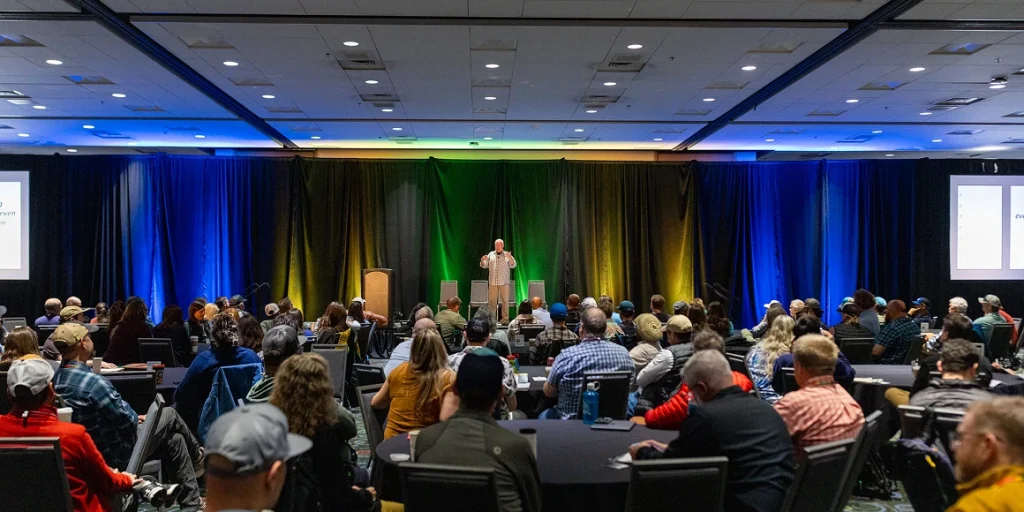
The excitement is building for the 2026 America Outdoors Conference, and we’re getting closer to sharing what’s shaping up to be one of our strongest educational programs yet.
Our Education Task Force has been hard at work reviewing proposals, meeting with speakers, and building a lineup designed specifically for outfitters, guides, and outdoor recreation professionals. From leadership and operations to marketing, risk management, workforce development, and public lands, this year’s program is coming together in a big way.
Watch your inbox over the next few weeks as we unveil the full educational schedule. At the same time, conference registration will officially open, including Early Bird pricing for those ready to secure their spot in Oklahoma City.
And that’s not the only exciting news…
Looking Ahead to 2027
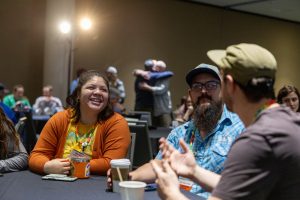
We’re thrilled to announce that the 2027 America Outdoors Conference is officially headed to Richmond, Virginia, December 7–10, 2027!
Richmond offers a vibrant outdoor culture, outstanding hospitality, and easy access from across the country, making it an incredible destination for our industry to come together. We’re excited to begin planning another memorable conference while we put the finishing touches on what promises to be an exceptional event this December in Oklahoma City.
Whether you’re joining us in OKC this year or already looking ahead to Richmond in 2027, we can’t wait to bring the America Outdoors community together for two outstanding conferences.
Stay tuned—the full conference schedule and registration announcement are coming soon!

Looking for coverage of the issues (many covered here more carefully and in greater depth) impacting the outfitting industry?
Tune in to the latest America Outdoors podcast episode. Whether you’re listening while prepping gear or commuting between locations, we break down the legislative wins, regulatory shifts, and member-focused advocacy driving our work in Washington and beyond.
Listen to the latest episode on YouTube or wherever you get your podcasts.
Fire, Water, & Closures
Wildfire and warm water pulled trips off the calendar this week in two very different parts of the country. In northern Minnesota, the Boundary Waters is closed for only the third time in its history and may not reopen this season. Across southwest Montana and inside Yellowstone, drought and warm water shut down fishing on rivers where a lot of guiding happens.
SBA Disaster Loans Available for Drought-Impacted Businesses
Outfitters and other small businesses affected by drought may be eligible for low-interest SBA Economic Injury Disaster Loans (EIDLs). In Colorado, multiple drought disaster declarations remain in effect across much of the state, making many businesses eligible for working capital assistance to cover payroll, rent, utilities, accounts payable, and other operating expenses—even if they did not sustain physical damage. (SBA Offers Relief to CO)
In Idaho, SBA disaster loans also remain available for eligible businesses in drought-affected areas in Shoshone County and contiguous areas that sustained wind and drought damage (Dailyfly news report). Applications close March 8, 2027. If your operation has experienced economic losses due to drought or related conditions, it’s worth checking whether your county is covered and whether you qualify.
SBA Disaster Loans: https://www.sba.gov/disaster
Boundary Waters Closed to All Entry, Order Runs Through October 1
The Forest Service closed all BWCAW entry points effective 12:01 a.m. CT on July 14. This is the third full closure in the wilderness’s history and the first since 2021. It sits inside a 3.9 million-acre closure across the Superior National Forest and takes roughly 1,900 wilderness campsites offline.
Superior National Forest has seen as many as 19 wildfires since July 7, most started by thunderstorms that brought lightning and little rain. Hot, dry, windy conditions well outside a normal Minnesota summer are driving fast and unpredictable fire behavior, and more dry lightning is in the forecast. Crews went in by canoe to notify campers, and the agency estimated evacuation would take about a week.
Overnight paddle, motor, and hiking reservations with entry dates July 13 through 17 are cancelled, along with day-use motor entries July 14 through 17. Recreation.gov is processing automatic full refunds. A forest-wide campfire ban took effect July 11.
The closure order runs through 12:01 p.m. CT on October 1, or until rescinded. That is October, not August. Forest Service officials expect to shrink the closed area once the full closure lifts, but they have said publicly that they do not expect the Boundary Waters to fully reopen this season. BWCAW outfitters are rebuilding a season during the busiest weeks of that season while processing refunds and fielding calls.
There is somewhere to send people. Superior National Forest has 23 developed campgrounds, 18 rustic campgrounds, and 254 backcountry sites outside the wilderness, many of them on remote canoe routes that need no fee, permit, or reservation. For a client who booked a wilderness paddle trip and just lost it, that’s a real trip to offer instead of a refund and a lost relationship.
Check Recreation.gov and the Superior National Forest alerts page for current status. Call us if you want help with client communication or refund processing.
Related, Industry-Relevant Read: Towboats, which are often controversial in the BWCA, praised for their role in fire rescues.
Montana Hoot-Owl Restrictions Expand July 15; One Madison Reach Closed Outright
Montana FWP expanded hoot-owl restrictions (no fishing 2 p.m. to midnight) across southwest Montana effective July 15. The July 15 expansion covers sections of the Big Hole, Beaverhead, Madison, Jefferson, Gallatin, East Gallatin, and Ruby, on top of restrictions already in place on the upper and lower Madison, the lower Beaverhead, and the Sun River.
FWP also closed one section of the Madison to fishing at all hours: from the Madison Dam at Ennis Reservoir downstream to the footbridge at the NorthWestern Energy powerhouse. Warm water coming out of Ennis Reservoir is keeping that reach from cooling overnight. The rest of the Madison remains open.
Inside Yellowstone, the Park Service closed the Firehole and Madison to fishing entirely, along with the Gibbon River and its tributaries downstream of Norris Campground (Yellowstone Fly Shop report). Peak water temperatures on those waters have run 80 to 86 degrees, with reports of dead fish in the Firehole.
FWP’s drought policy triggers restrictions when flows drop below critical levels, water quality declines, or maximum daily temperature hits 73 degrees for three consecutive days; water at 77 degrees and above can kill trout. This list has moved twice in a week. Pull the current Montana FWP restrictions page and map before you book or run anything.
Federal Land Management
Bears Ears and Grand Staircase-Escalante Cut by Roughly 90 Percent
Presidential proclamations signed July 13 cut both Utah monuments by roughly 90 percent. Bears Ears drops from about 1.36 million acres to about 121,000, retaining the Shash Jáa and Indian Creek units. Grand Staircase-Escalante drops from about 1.87 million acres to about 181,500. The combined reduction is close to three million acres, a larger rollback than the 2017 reductions that were reversed in 2021.
Lands removed from monument designation revert to multiple-use, sustained-yield management under BLM and USFS. Grazing, timber, fishing, hunting, resource development, and motorized recreation all return to the table. The excluded lands open to new mining claims and mineral leasing roughly 60 days after signing, about September 11, subject to existing withdrawals and valid rights.
The Bears Ears proclamation disbands and terminates the Bears Ears Commission, the five-tribe body (Navajo Nation, Hopi Tribe, Ute Indian Tribe, Ute Mountain Ute Tribe, and Zuni Tribe) that produced the first tribally led national monument management plan in the country. The proclamation states the Secretaries have no obligation to engage, consult, or coordinate with it, while noting they will continue to consult with Tribal Nations under other authorities. The Bears Ears Inter-Tribal Coalition says no consultation occurred before the decision and points to a June 2025 written commitment from Interior to convene the Commission before any change to boundaries, management, or designation.
In the Commission’s place, the proclamation establishes a broader advisory committee to inform development of the management plans. The five Tribes retain representation on it, joined by county and municipal officials and six members selected by Utah’s governor. Each of those six seats is tied to a named interest: local business owners, conservationists, outdoor recreationists, private landowners, archaeologists or historians, and livestock grazing permittees.
One of the six governor-appointed seats is designated for outdoor recreation. Whether that seat reaches commercial outfitters, or is read to cover only off-highway vehicle and other non-commercial recreation, is not settled in the proclamation text. If it does reach commercial providers, it would be a recreation seat at the table where the plan gets written, which the prior framework did not have. That is worth watching, not banking on.
The proclamation also directs BLM and USFS to prepare a new transportation plan designating roads and trails for motorized and non-motorized use, and directs the Secretaries to authorize traditional uses including grazing, recreation, timber management, public access, and infrastructure development to the greatest extent possible under applicable law.
For outfitters guiding hiking, canyoneering, OHV, hunting, and photography in and around these monuments, management shifts from a tribally informed plan toward a multi-use committee where recreation sits alongside extractive interests. Route availability, access, and the character of the country your clients pay to see can all move with that.
New management plans are expected with public comment to follow. Litigation is expected as well, from the same coalition that sued over the 2017 reductions, so current boundaries may not be final. The proclamations had not appeared in the Federal Register as of this writing.
If you outfit in or around Bears Ears or Grand Staircase-Escalante, take a couple of minutes to complete our survey: AO Assessment: Utah Monument Boundary Changes and SRP Impacts.
Read also:
White House proclamation
White House fact sheet
ESA “Harm” Definition Rescinded, Effective September 14
We flagged this one for you when FWS and NMFS proposed it earlier this year. It is now final. The two Services rescinded the regulatory definition of “harm” under the Endangered Species Act in a final rule published July 14, effective September 14. Under the rescinded 1981 rule, “harm,” and by extension the prohibited “take” of a listed species, encompassed significant habitat modification that indirectly killed or injured wildlife by impairing essential behaviors like breeding, feeding, or sheltering. With the definition removed, the take prohibition turns on directly injuring or killing a protected animal. Habitat modification alone no longer triggers ESA take liability.
The Services did not adopt a replacement. They will rely on the statutory text as interpreted in Justice Scalia’s Sweet Home dissent, under which take requires an affirmative act directed at a particular animal rather than conduct that indirectly and accidentally injures a population. The reasoning traces to the Supreme Court’s 2024 Loper Bright decision and the Services’ view that the old definition was not the single best reading of the statute. Private parties seeking incidental-take permits under Section 10 no longer need to address habitat modification in their conservation plans. The rule applies nationwide on federal, state, tribal, and private land.
The rescission is prospective. Permits and incidental take statements finalized before the effective date will not be reevaluated, and habitat-affecting activity undertaken before September 14 without incidental take coverage could still carry enforcement exposure.
This narrows when land-disturbing or habitat-altering activity triggers take liability, which could reduce permitting friction for facilities, access improvements, and land uses tied to guided operations. It also reshapes the backdrop for the public-land planning that governs where you operate, and that cuts both ways over a longer horizon. Habitat is the product a lot of our members sell.
The proposal drew more than 350,000 comments, and legal challenges have been threatened, so the practical effect remains unsettled. Nothing to do today beyond watching for a litigation stay before September 14.
Read on:
Federal Register final rule
Holland & Hart analysis
USFS Climbing Directive: Comments Due Monday, July 20
The proposal establishes FSM 2355, Climbing Opportunities on National Forest System Lands, the agency’s first national direction on climbing management. It covers wilderness and non-wilderness across the entire National Forest System land base and implements Section 122 of the EXPLORE Act, the PARC provisions, codified at 16 U.S.C. 8422. At its center, the directive treats certain fixed anchors, when limited in scope and placed consistent with wilderness stewardship, as distinguishable from the installations prohibited under Section 4(c) of the Wilderness Act, so they generally would not require a minimum requirements analysis. That reverses the 2023 draft. The directive creates no permit or notification process for individual climbers. Roughly 30 percent of U.S. outdoor climbing sits on National Forest System land, so a single national policy replacing district-by-district practice is a real change for anyone guiding climbing on a forest.
AO drafted its own comments, and the thrust is practical rather than legal. The directive ties many decisions, including retention and replacement of fixed anchors in wilderness, to the applicable climbing management plan. Those plans will take years to write and will depend on local capacity and funding, and the directive says little about how existing routes and anchors get managed in the meantime. We asked the agency to fill that gap by making clear that existing routes and anchors, and the maintenance that keeps them safe, can continue while a forest’s plan is still pending.
The rest of our comments follow the same direction. The EXPLORE Act says routes and fixed anchors in existence as of January 4, 2025, stay available for continued use and maintenance, and we asked that routine maintenance and one-for-one replacement be handled in a timely, practical way, with removal of a legacy anchor treated as a last resort tied to a site-specific finding of measurable harm. We also asked that “replacement” be interpreted to allow reasonable modernization, so a guide is not forced to reinstall failing hardware exactly as it existed before. Finally, we requested a clear role for commercial permittees in how routes are managed. For a guide working an established route, knowing the anchors will still be there next season is a safety and operational question before it is anything else.
The commercial casual-use line for guided climbing is not addressed in this directive, though many reports combine the two climbing dockets. That issue is part of BLM’s draft revision to Manual 6340 (BLM-2026-0034), which remains open for comment until August 14 and is included in AO’s coordinated BLM comment package. Where commercial guiding falls relative to casual use will be decided in that August filing, not in the Forest Service directive. The Forest Service has also said it will publish a separate notice proposing revisions to 36 CFR Part 261, Subpart A, so restrictions in climbing management plans can be enforced. That proposal is still forthcoming.
AO submitted comments on Monday, July 20.
Forest Service Proposes to Modernize Its Directive System; Comments Due July 31
The Forest Service published a proposed rule on July 1 (RIN 0596-AD74, 91 Fed. Reg. 39948) that would restructure its Directive System. The stated goal is a cleaner, clearer line of authority: the Forest Service Manual would become the sole source of continuing, mandatory direction, while the Handbooks would be reclassified as advisory guidance. Officials could still depart from Manual direction where the law allows and the public interest supports it, provided they document the justification. On its face, the proposal is intended to simplify a directive system that has become difficult to navigate.
The catch for permit holders is that FSH 2709.11, which governs special-use authorizations, cost recovery, fee calculations, renewal criteria, and outfitter and guide conditions, is a Handbook. Reclassifying it as advisory cuts both ways. Added flexibility could help a district office more readily accommodate a late renewal, adjust an operating plan mid-season, or work through a documentation gap without a formal amendment. The same flexibility could also allow an office to depart from the cost-recovery methodology, fee calculations, or renewal timelines that FSH 2709.11 currently lays out, without the documentation the binding Manual requires. Because Handbook provisions would no longer carry mandatory weight, permittees would have less ability to hold the agency to a consistent standard when a decision goes against them. The proposal would also narrow when the agency must seek public comment before changing its directives in the future.
The agency specifically invites the public to identify which Handbook provisions should be codified in the Code of Federal Regulations to keep them enforceable. For outfitters, that is a direct opportunity to identify the FSH 2709.11 permit administration provisions, such as renewal criteria, denial and termination procedures, and public comment timeframes, that should be incorporated into the CFR rather than left as guidance that can be set aside. AO is preparing comments that do exactly that, and our filing is not yet complete.
This is a separate docket from the climbing directive that closed July 20. It addresses the framework underlying all Forest Service special-use permitting.
Comments are due July 31 through Regulations.gov or by email to [email protected].
BLM Reopens Its Wilderness Manuals; Four Dockets Close August 14
On June 15, BLM published four coordinated notices that together put the agency’s wilderness management policy back on the table. All four comment periods close August 14, 2026, and all four could affect how Special Recreation Permits are issued and managed on BLM wilderness lands.
Three of the four are open-ended reviews of existing manuals. Manual 6340 (BLM-2026-0067) governs congressionally designated wilderness and is where the “extent necessary” standard for commercial services is found. Manual 6330 (BLM-2026-0069) covers Wilderness Study Areas, including the non-impairment standard and long-term stewardship rules for areas Congress has not designated as wilderness. Manual 6320 (BLM-2026-0068) covers Lands with Wilderness Characteristics and how BLM uses land-use planning to manage them, including the authority to exclude or restrict commercial uses. The fourth notice, BLM-2026-0034, is a proposed climbing update to Manual 6340 that incorporates the EXPLORE Act’s PARC provisions on fixed anchors, casual use, and commercial services.
None of the three open-ended review notices specifically mentions commercial services, outfitters, or guides. That does not mean outfitters are unaffected. It means operators who work in these areas need to help build the administrative record or risk being left out of future revisions.
AO’s comments focus on four key issues. Manual 6340 currently bars commercial services from using categorical exclusions under NEPA, meaning routine permit adjustments, such as capacity changes, seasonal modifications, or replacement operators, often require full environmental assessments even when the activity has already been reviewed. We are asking BLM to remove that blanket prohibition or create an exception for previously analyzed outfitting and guiding activities.
We are also asking BLM to update its commercial filming provisions so they are consistent with the EXPLORE Act’s framework for incidental filming on authorized trips. In Wilderness Study Areas, grazing, mining, and mineral leases are treated as pre-existing rights that are not subject to the non-impairment standard, while outfitting is not. We are asking BLM to justify that distinction or eliminate it.
Finally, the manual allows commercial services only “to the extent necessary” to realize wilderness purposes but provides no clear process, evidence standard, or review schedule for making that determination. That lack of direction has led to inconsistent application across field offices. We are not asking for a rigid formula. We are asking for transparency about what evidence supports a decision, how often findings are reviewed, and what notice permittees receive before permits are reduced or denied.
We are not trying to weaken wilderness protections. We are working to make the rules more predictable for the outfitters and guides who help Americans experience wilderness under federal permits.
Comments may be submitted electronically through Regulations.gov by searching the docket numbers above and selecting “Comment Now,” or by mail or hand delivery to BLM Headquarters, 1849 C St. NW, Room 5646, Washington, DC 20240. For all three manual reviews, the contact is Sean MacDougall at [email protected] or (970) 256-4934.
AO is finalizing its comment package and needs member input by August 1. If you have experienced an “extent necessary” determination that seemed arbitrary, a categorical exclusion denial that delayed your permit, or any other BLM wilderness permitting issue that demonstrates why these manuals should be improved, please send the details to Aaron by August 1. Permit numbers, dates, and decision documents make comments persuasive. General complaints do not.
Grizzly Bear Management Proposal Returned Toward the States
Interior announced a revised proposal on July 14 that is intended to increase management flexibility for grizzly bears in areas where recovery benchmarks have been met, while maintaining Endangered Species Act protections.
The announcement does not specify which ecosystems or states are covered, whether any delisting is proposed, or whether hunting would be addressed. No proposed rule or Federal Register notice has been published, and no public comment period has been announced.
At this point, the announcement reflects policy direction rather than a regulatory change. There is nothing outfitters or guides need to do differently today. Hunting outfitters operating in grizzly country should watch for the forthcoming Federal Register proposal, where the details and public comment opportunity are expected to be released.
Read more: DOI press release.
ESA 90-Day Findings Open Status Reviews for Aquatic Species
The U.S. Fish and Wildlife Service found that seven petitions present substantial information warranting status reviews, including the Goose Lake lamprey, Goose Lake sucker, and Goose Lake tui chub in the Oregon and California basin, as well as the diamondback terrapin, Cascade red fox, plains spotted skunk, and Loopy Five firefly. Three petitions were declined. The agency is now requesting scientific and commercial information on the seven species under review.
Several of the species are aquatic. If any ultimately move toward listing under the Endangered Species Act, fishing and paddling guides operating in those watersheds could eventually see new access or fish-handling restrictions.
This is an early step in the listing process rather than an operational change. AO will continue tracking the reviews and report on the required 12-month findings.
Read more: Federal Register, 90-Day Findings for 10 Species.
Four Recreation RACs Post Fee Agenda Items
Four Forest Service Recreation Resource Advisory Committees published meeting notices on July 9, each including recreation fee agenda items under the Federal Lands Recreation Enhancement Act. The committees cover the Yavapai Recreation RAC (Prescott National Forest), Idaho Panhandle, Fresno and Madera (Sierra National Forest), and West Virginia (Monongahela National Forest).
Forest-level fee decisions help determine site access costs and influence the fee environment surrounding commercial recreation. These RAC meetings are one of the few opportunities for the public to provide input before those decisions are made.
The Idaho Panhandle and West Virginia forests are particularly important to many AO members. If you operate on any of these forests, review the meeting dates in the Federal Register notices and consider attending or submitting comments if a proposed fee change could affect your business.
Legislative & Congressional Activity
Two Columbia River Salmon Bills Would Expand Sea Lion Removal
Two bills introduced on July 9 take different approaches to the same issue: reducing pinniped predation on endangered Columbia River salmon and steelhead. Both would amend the Marine Mammal Protection Act and have been referred to the House Natural Resources Committee.
Supporters point to the same underlying concerns: California sea lion populations have grown from about 75,000 animals when the Marine Mammal Protection Act was enacted in 1972 to more than 300,000 today. Sea lions have been estimated to consume as much as 40 percent of some spring Chinook runs, and nearly one in four fish counted at Bonneville Dam this spring showed sea lion bite wounds.
H.R. 9621, introduced by Rep. Michael Baumgartner (R-WA) with Rep. Emily Randall (D-WA), would expand the existing Section 120 removal program on the Columbia River to cover additional species and the full mainstem. It would also establish a new permit program for Washington marine waters with take limits and reporting requirements.
H.R. 9637, introduced by Rep. Marie Gluesenkamp Perez (D-WA), would instead authorize covered Tribes to conduct lethal removal of sea lions on the Columbia River mainstem and tributaries with fewer procedural requirements and no numerical cap. The bill received a Statement of Administration Policy in support on July 10, tied to Executive Order 14276 on American seafood competitiveness. Receiving Administration support one day after introduction is unusual and suggests the proposal may receive additional attention.
Sea lion predation is a documented factor affecting the salmon runs that many Columbia River guides depend on. The key question is not simply whether removal authority expands, but whether these specific approaches will improve salmon returns and fishing opportunities.
If you guide on the Columbia River or elsewhere in the Pacific Northwest and would like AO to engage on this issue, we’d like to hear your perspective.
Read more:
Rep. Gluesenkamp Perez news release
Statement of Administration Policy (July 10)
Senate ENR Subcommittee Hears Colorado and New Mexico Designation Bills
The Senate Energy and Natural Resources Subcommittee on Public Lands, Forests, and Mining held a hearing July 15 on several designation bills, including S. 1791 (Sen. Bennet, D-CO), designating special management, wildlife conservation, recreation, and wilderness areas in Colorado; S. 4458 (Sen. Heinrich, D-NM), establishing the Caja del Rio Special Management Area and National Conservation Area in New Mexico; and S. 4200 (Sen. Cortez Masto, D-NV), on conservation and public land in Douglas County, Nevada.
The Colorado and New Mexico bills create new designations governing where and how guided recreation is permitted, and wilderness designation carries the standard prohibition on motorized and mechanized transport, which is where shuttle and access options get tight. Operators in those states should track whether the proposed boundaries constrain motorized use, stock use, or commercial permits in counties where you operate.
AO may submit testimony on the Colorado and New Mexico bills. If you have concerns about how these designations would work on the ground, please share them with us.
More: Senate ENR hearing agenda.
Coming Up: House NR Permitting Hearing July 21
The Subcommittee on Energy and Mineral Resources has noticed a July 21 legislative hearing on H.R. 8003 (Rep. DeLuzio), the Expanding the Fast Track Act of 2026, which would expand FAST-41 covered-project treatment. Recreation relevance is indirect, but DeLuzio co-authored the Recreation Permitting Improvement Act (H.R. 9248) we covered July 8, so his permitting agenda is worth tracking as a whole. We will monitor and flag anything recreation-relevant.
More: House NR legislative hearing notice.
Already-Covered Bills: Checking In.
No new floor action July 8 through 15 on the bills we tracked in the July 8 issue.
- H.R. 9248 (Recreation Permitting Improvement Act, Hurd/DeLuzio): latest action remains the July 1 subcommittee hearing.
- H.R. 9250 (GAOA 250) and S. 1547 (America the Beautiful Act, LRF reauthorization): no new floor action. Supporters missed the July 4 target and attention has shifted to budget reconciliation.
- S. 4838 (ORG Act, Daines) and H.R. 3499 (Owens, FLSA overtime exemption): no new action from committee calendars or policy roundups.
- FY2027 Interior-Environment appropriations: cleared full committee in early June, no floor time during the window. The House floor was frozen much of the week by a Republican procedural standoff.
The Legacy Restoration Fund clock is something we’re watching. The current fund expires September 30. Nothing moved this week.
Labor and Hiring
H-2B FY2027 First-Half Randomization Results Are Out
The July 8 issue told you the filing window was opening July 3 through 5. Here is what came of it.
OFLC ran its randomization for the first-half FY2027 cap, covering October 1 start dates, and placed 2,625 applications covering 51,158 worker positions into two assignment groups. Group A holds 1,881 cases, enough to reach the 33,000-visa semi-annual allotment. Group B holds the remaining 744. Employer notices went out July 6.
Filings ran about 8 percent above last year’s October cycle (JTP Agency update), which drew 2,421 applications for 47,488 positions.
The fall cycle is not the spring cycle. The April 1, 2026 cycle drew 10,062 applications covering 162,603 positions against the same 33,000-visa allotment, roughly five times oversubscribed. The October cycle is running about one and a half times oversubscribed. Fall has been a far better draw than spring for years running. If the April lottery is what shaped your expectations, recalibrate.
Group A is sized to reach the allotment, which is not the same as a guarantee. Where your application falls in the processing queue inside Group A still determines whether you get workers. If you are in Group B, you are planning for a fall without them, or planning around them.
Check your July 6 OFLC notice to confirm your assignment group. The September 15 petition deadline for the third FY2026 supplemental allocation still stands, and no FY2027 supplemental has been announced. Because H-2B turns on individual filing facts, confirm your own situation with your immigration counsel rather than with us.
DOL Regulatory Plan Signals Heat, Tip-Credit, and Contractor Rules
DOL’s semiannual regulatory agenda, released July 3 and analyzed July 14 (Fisher Phillips analysis), sets out targets worth tracking: a supplemental heat-injury NPRM by December 2026, tip-credit regulations before year-end, a revised independent-contractor rule by October, and a PERM NPRM targeted for July 2026.
None of these is a rule yet. They are stated intentions with target dates, and target dates slip. We will flag the NPRMs as they appear.
IRS Mileage Rate and Withholding Estimator Updated
The IRS published revised standard mileage rates effective July 1 in Bulletin 2026-29 and updated its Tax Withholding Estimator on July 10 to reflect the Working Families Tax Cuts changes.
Commercial Insurance Market Continues to Soften
Lockton’s mid-year market update reports that commercial insurance conditions have softened across many lines, describing a more buyer-friendly market than a year ago. The report does not break out adventure sports or guided recreation, so read this as directional context rather than a line-item read on your coverage.
Source: Lockton market update.
Deadlines and Action Items
July 22: Utah Trail Canyon TMP (Kanab Field Office); Email [email protected]
July 23: Utah Dinosaur North TMP (Vernal Field Office); Submit to BLM Vernal Field Office
July 29: Section 133 Visitation Pilot Framework; Comment via the BLM ePlanning Portal
July 31: Forest Service Directives Proposed Rule (RIN 0596-AD74); Submit via Regulations.gov or email [email protected]
August 1: Member examples for AO’s BLM wilderness comment package; Send permit numbers, dates, and decision documents to Aaron
August 14: All four BLM wilderness dockets (Manuals 6340, 6330, 6320, plus climbing), including the commercial casual-use line for guided climbing; Submit via Regulations.gov
September 11: Bears Ears and Grand Staircase-Escalante excluded lands open to mineral entry; Subject to valid existing rights; watch for management plan comment periods
September 14: ESA “harm” rescission takes effect; Watch for litigation stays
September 15: Petition deadline for the third FY2026 supplemental H-2B allocation; File via the FLAG system
September 30: Current Legacy Restoration Fund expires; Watch for floor action on H.R. 9250 / S. 1547
March 8, 2027: SBA disaster loan deadline (Idaho wind and drought); Apply via SBA
Fall/Winter 2026: Draft EA expected for the Utah Dolores River TMP (Moab Field Office); Monitor the BLM ePlanning Portal
More News & Such
ORR Releases National Disaster Resilience Playbook
The Outdoor Recreation Roundtable (ORR) has released its first National Disaster Resilience Playbook, a practical guide for state outdoor recreation offices to prepare for and accelerate recovery from wildfires, floods, and hurricanes. The playbook draws on firsthand lessons from state directors who have managed recent climate-driven crises. For operators who partner with state agencies on infrastructure or public land access, this is a key resource for the resilience conversation in your home state.
One Big Beautiful Bill & Beyond: One Year Later
The One Big Beautiful Bill continues to reshape the tax landscape for employers. Join ADP for a complimentary webinar on Thursday, August 6, at 2:00 p.m. ET for a practical update on the latest IRS guidance, implementation status, key filing deadlines, R&D tax credits, energy and sustainability incentives, and what’s next for businesses. Whether you’re a small outfitter or a larger operation, this session will help you understand how these changes may affect your business and where opportunities may exist.
Register: https://bit.ly/OBBAugFran
BLM Proposes Overhaul of Grazing Rules
The Interior Department is pushing to “modernize” grazing regulations across 155 million acres of BLM land—the first major update in 31 years. The proposed rule aims to streamline administration for permittees by cutting red tape. As with any rewrite of management policy across 7% of the U.S. landmass, the final rule will inevitably shape range-management priorities and the landscape health of the public lands your trips depend on.
Gunnison Outdoor Resources Protection (GORP) Act Advances
The Senate Energy and Natural Resources Subcommittee held its first hearing this week on the GORP Act, which would protect over 730,000 acres in western Colorado through special designations for recreation, wildlife, and conservation. The bill has built broad, collaborative support from local counties, the Ute Mountain Ute Tribe, and Colorado businesses. It’s a bellwether for how western Colorado—and its outdoor industry—is trying to balance growth with permanence.
Read Senator Bennet’s press release.
Michigan DNR Surplus Land Auction
Michigan’s DNR is auctioning 97 surplus properties this summer to fund its Land Exchange Facilitation Fund. The model is worth noting: proceeds from selling low-utility surplus lands are specifically earmarked to acquire higher-value, more usable properties that improve public access and conservation. It’s a rare example of a state agency actively trading “surplus” assets to upgrade its recreation portfolio.
NMMA Boating Data: Freshwater Fishing Holds Steady
New powerboat retail unit sales fell 7.1% on a rolling 12-month basis through April, while freshwater fishing boat sales saw a slight 0.4% uptick. The data reflects a cautious consumer environment navigating elevated interest rates, but also points to continued resilience in the freshwater angling market—a bright spot for fishing outfitters as discretionary spending remains under pressure.
Read the MarineBusinessWorld summary.
Greatest Rescue Selfie Ever
Editorial Aside: I think we can do better than this.
Sometimes the best souvenir is simply making it home. A Pacific Crest Trail hiker managed to snap a smiling selfie with the rescue helicopter crew that flew them to safety—a reminder that preparation matters, and SAR teams remain some of the outdoor industry’s greatest unsung heroes.
Read: https://outdoors.com/greatest-rescue-selfie-ever-injured-hiker-takes-pic-with-rescuer/
When Low Water Doesn’t Mean No Water (Watch – 4 minutes)
Colorado outfitters are proving that a lean snowpack doesn’t automatically mean a lost season. It’s a practical look at how operators are adapting trips, equipment, and expectations while keeping guests on the water.
Watch: https://www.pbs.org/video/colorado-outfitters-adapt-as-rivers-plummet-hpqjfu/
A Surprisingly Low-Tech Cooling Hack
Sometimes innovation looks suspiciously like something found in your grandma’s freezer. A Tour de France team drew laughs (and attention) with an extremely simple approach to beating the heat during one of cycling’s biggest events.
Read: https://www.outsideonline.com/gear/ineos-cooling-tour-de-france/
Not Every Yellowstone Visitor Is a “Touron”
A viral bison video made the rounds online, but the person behind the camera says the internet got this one wrong. It’s a worthwhile reminder that social media rarely captures the whole story, and that even experienced visitors can end up in difficult situations outdoors.