AOA’s Letter to America
by Aaron Lieberman, Executive Director, America Outdoors
America turns 250 this year. That is a long time for an experiment, especially an experiment in self-governance whose outcome was never guaranteed. The founders did not promise it would work. They bet that it could.
Two hundred and fifty years later, the right response is not nostalgia alone. It is honest reflection on where we are, what we have gotten right, and what the next chapter asks of us.
My perspective comes from a career spent in the American landscape. I started as a guide on western rivers and in the backcountry, later led Idaho’s outfitter association, and now serve as Executive Director of America Outdoors Association. From this vantage point, I see something the national conversation often misses.
Americans agree on more than we tell ourselves we do. Not always on policy or politics, but on something more fundamental: the strong and deeply personal connection we share to this vast, varied landscape.
America is a rugged, mismatched, and occasionally indifferent geography, home to a hodgepodge of people who often seem, at least on the surface, to have very little in common. The industry I represent is a reflection of that reality. Our members work in the river canyons of Appalachia, the frozen backcountry of Alaska, the high deserts of Arizona, and countless places in between. They include Chaco-wearing river guides, Levi-wearing cowboys, small business owners, conservationists, hunters, anglers, paddlers, horse packers, climbers, and people who simply make their living helping others experience the outdoors.
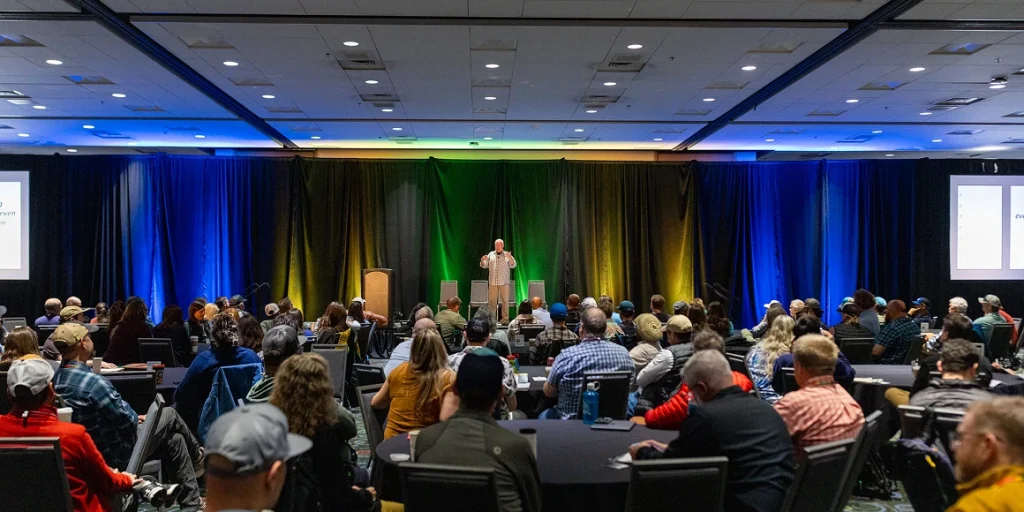
They also represent the full political spectrum. Republicans, Democrats, Independents, and people who do not vote at all can be found standing shoulder to shoulder at our conference, swapping stories over a beer. That is the America we actually live in. It is also an America worth celebrating.
What unites them is not a shared ballot, but a shared sense of responsibility. Our members are independent operators who compete for customers, then turn around and work together on safety standards, access, resource protection, and the health of the places where they work and live.
I regularly see members speak up for access, conservation, and stewardship not because it is politically convenient, but because it is the right thing to do.
They built a professional association because they understood that individual success depends on the health of a commons: clean water, healthy landscapes and wildlife, reasonable access, coordinated action, and a regulatory environment that treats them as the professionals they are.
And while it may not be written down in any formal creed, they share a basic one: take care of the resource, take care of your guests, and take care of each other.
Just as important, they have developed the habit of standing with one another even when they disagree on the details. I regularly see members speak up for someone else’s priority, not because they agree on every policy point, but because they understand that it matters to that colleague’s livelihood, community, and landscape. They carry one another by choice, acting on the conviction that a shared load is lighter when people decide to lift together.
This shared territory remains one inheritance that Americans hold in common. The legal fact of our public lands may predate many of today’s arguments, but the connection runs deeper than law. The broad public support for protecting these places reflects something many Americans understand instinctively: wild places offer a kind of perspective the modern world rarely provides.
9/10
Support protecting public lands and the places they make possible.
3/4
Wild places offer perspective the modern world rarely provides.
What divides us can feel enormous until you are standing beside someone watching the sunrise over a canyon. Perspective can shrink the distance. That is not only an image of recreation; it is democracy in profile.
These observations are not just anecdotal. Nine in ten Americans say there is an urgent need for greater unity, and three in four believe we can still work through our differences to find common ground. Those numbers do not describe agreement on any one policy. They describe a conviction that we still belong to the same story, even when we are arguing over its next chapter. We can dwell on the things that divide us: politics, policy, ideology. But all of us dwell within landscapes that connect us.
The outdoor industry understands this as a practical reality, not a slogan. At a time when Congress can barely agree on a budget, we have still seen bipartisan pushback against proposals to sell off or privatize our public lands. We also saw, in the passage of the EXPLORE Act, unanimous congressional recognition that the ability to recreate on this land is a shared inheritance.
“In an era of profound division, treating land and outdoor experience as common ground still works.”
What the next 250 years ask of us is something the outfitting community already practices: stewardship that extends beyond our own tenure. Our work is to ensure that people leave wild places with more than a photograph. It is the civic work of planting trees whose shade we may never sit under.
That kind of practice does not require agreement on everything else. It requires a commitment to the commons, and to the people who will inherit it next.
Nobody knows what the next 250 years will bring. What I know is that the land will outlast any current argument. The people who spend time together on it tend to find more in common than they expected.
The experiment is still running.
Happy Birthday, America.
Aaron Lieberman
Executive Director
America Outdoors Association