The Outfitter Brief
News, Insights, and Advocacy from America Outdoors
September 29, 2026
ORGANIZATIONAL UPDATES
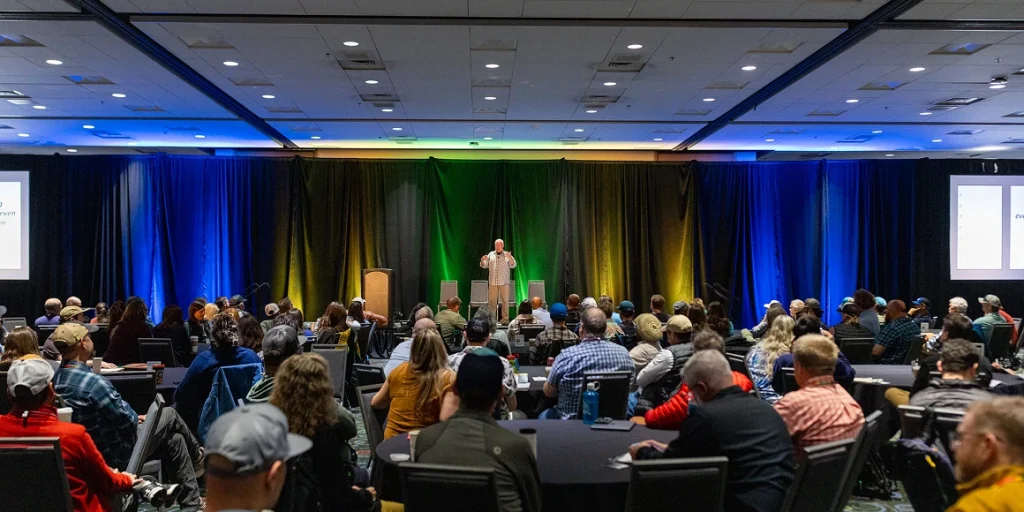
The outfitting industry is coming to Oklahoma City. Will you be there?
The America Outdoors Conference is built for the realities of running an outfitting business, from permits, staffing, safety, and operations to marketing, leadership, and planning for growth. It’s where outfitters compare what’s working, learn from one another, and build relationships with people who understand the industry because they live it too.
Don’t wait to make your plans. Join your outfitting community December 8-11 and save $100 with early-bird pricing through November 6.

The 2026 AO Industry Trend Survey is live. It is anonymous, takes 15-20 minutes, and one response per business is all we need. The data helps shape AO’s policy positions, member resources, and industry reporting for the coming year. If you have not yet completed it, please take the time before the season shifts.
BLM launches All Americans Outside in Moab, Utah
BLM formally launched All Americans Outside on September 25, a national initiative designed to connect more people with their
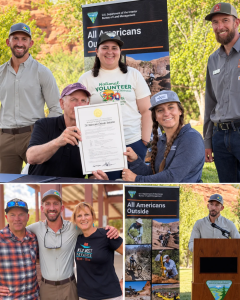
public lands.
America Outdoors Executive Director Aaron Lieberman joined outfitter members at the launch, representing both AO and Outdoor Recreatio
n Roundtable. Aaron had the honor of introducing BLM Director Steve Pearce for the announcement.
Initiatives like this show the value of strong, structured partnerships. When land management agencies, outfitters, and recreation interests plan together, our industry has a voice i
n the decisions shaping public-land access and outdoor programming.
More Pro Deals for AO Members
AO members now have even more ways to save on outdoor gear. In addition to the ExpertVoice industry pro deals already available, members should begin receiving invitations from Guidefitter and Outdoor Prolink.
Guidefitter also offers outfitters free pages to market their trip offerings, and all of their guides are eligible to sign up for free accounts. Contact [email protected] to get your outfitter page or guide accounts set up.
Watch your inbox, sign up, and start enjoying these expanded benefits. If you don’t receive an invitation but would still like to participate, visit the AO Member Benefits page for sign-up information.
Not a current member? Join or renew your AO membership to take advantage of these pro deals and the full range of member benefits, from practical business resources to industry connections and advocacy. Your membership also supports AO’s work on behalf of outfitters and guides.

Less Admin, More Outdoors: How ADP Can Simplify Payroll, HR, and Compliance for AO Members
Running an outdoor business comes with enough moving parts. Payroll, HR administration, employee benefits, and changing compliance requirements shouldn’t demand more time and attention than necessary.
As part of AO’s commitment to providing members with practical business resources and meaningful savings, we’re hosting an exclusive webinar with ADP. Whether you’re considering a new payroll provider or want to get more from your current system, you’ll learn how ADP can simplify payroll and workforce management, support recruiting and onboarding, strengthen HR practices, and help your business stay current with compliance requirements.
You’ll also get a closer look at ADP’s technology and learn about exclusive offers for AO members, including lifetime discounts, no setup fees, and three months of free payroll processing.
The session will be led by Adam Engleman, ADP’s National Director of Strategic Partnerships. As a former fly-fishing and rafting guide and outfitting manager, Adam understands the realities of running an outdoor business and the value of spending less time on administration and more time moving your business forward.
Join us to explore this AO member benefit, ask questions, and determine whether ADP could be a good fit for your business.
Register to attend the webinar

In our latest special episode, industry experts examine how large verdicts and legal barriers are reshaping the operating environment for outfitters. The conversation looks at recent reform efforts in states including Oregon and Arizona, where outfitters are organizing to protect their businesses and preserve access to insurance. Watch the full episode for a closer look at the legal landscape and the lessons these state efforts may hold for others.
FEDERAL POLICY AND RULEMAKING
FOREST SERVICE
Travel Management Rule scoping is closed, and AO’s comment submitted.
Forest Service scoping on the revision of 36 CFR parts 212 and 261 closed September 23 under docket FS-2026-0100. Regulations.gov lists 132,034 received submissions. America Outdoors’ comment, joined by eight outfitter and guide associations, is posted as FS-2026-0100-131009. The agency has not published proposed rule text or a schedule. This stands to impact most USFS permittees, especially those who rely on national forest roads, trails, or airstrips. (Roadless Rule comments, a separate front, remain due October 6.)
Scoping itself changes no route designation or motor vehicle use map. The next documents are the proposed rule and draft environmental impact statement, and the Forest Service has not said with specificity when it will publish them. Your comment on the proposed rule will be strongest and most appropriate with location-specific detail about the routes, trailheads, launches, airstrips, and camps in your operating plan, so keep those notes current, or start taking them. You can read our comment and its attachment on the public docket.
The comment we submitted asks the Forest Service to replace the minimization criteria the agency proposes to remove with a written decision standard, and to bar closing a road, trail, or area to guided use only because the use is guided while the same activity stays open to the public. It requests self-executing provisions for Class 1 e-bikes—if the agency adopts self-executing exemptions—on trails where non-motorized mountain biking is allowed, ensuring permitted outfitters with approved mountain bike operating plans are automatically covered. The comment also highlights the need for clear definitions regarding vague exceptions for off-route driving—namely, the named uses in the notice: game retrieval, firewood collection, and dispersed camping—and asks for advance notice directly to permit holders whose operating areas or access routes connect to a feature under review. Additionally, it advocates for the permit exemption from route designation to cover motor vehicle use in an approved operating plan and asks the agency to analyze outfitting and guiding as its own economic sector in the EIS. We encourage members to complete AO’s travel management survey to provide operational specifics for coming rounds of rulemaking.
Reminder: Roadless Rule comments are now due October 6
As recently reported here, USDA published a notice on September 11 extending the comment period on the proposed rescission of the 2001 Roadless Area Conservation Rule by 15 days. Comments are now due October 6, 2026, and the extension covers the proposed rule text, the draft environmental impact statement, and the cost-benefit analysis. The underlying rescission proposal was published August 20, 2026, at 91 FR 53827, under docket FS-2025-0001 and RIN 0596-AD66. It reaches USFS permittees nationwide. Inventoried roadless areas cover 58.5 million acres of the National Forest System. The Idaho and Colorado state roadless rules are not affected and will remain in effect. AO is well into development of its comments already. If your permit area, access road, trailhead, put-in, take-out, or camp sits inside an inventoried roadless area, pull your forest’s section of the draft EIS and write down what changes on your ground before you comment.
Read the extension notice (FR Doc. 2026-18648) for the deadline and scope. File under docket FS-2025-0001 on Regulations.gov. Send us your location-specific detail through the AO Roadless member input form. Use this form for Roadless comments only; Travel Management examples go to the Travel Management survey linked above. For background on the rule and what it means for outfitters, watch our September 8, 2025 Member Town Hall recording (some details will have shifted since recording, but it is a good starting point for refreshing yourself on the rule). AO is filing comments in this docket and coordinating coalition comments with state and regional partners.
Montana and North Carolina forests take recreation fee comments through early October
Helena-Lewis and Clark National Forest in Montana extended its comment period on proposed new and increased campground, group-site, and cabin fees to October 2. The National Forests in North Carolina are taking comments through October 5 on a proposal that would add a $50 fee to reserve the group picnic pavilions at Poplar Boat Launch and Rocky Bluff, planned improvements at recreation areas that otherwise remain free, and raise Balsam Lake Lodge from $200 to $250 on weekends and from $170 to $210 on weekdays.
On both forests, the proposals are slated to go to a citizen advisory committee before the Regional Forester decides. Comment on the Montana proposal through the Helena-Lewis and Clark fee page. For North Carolina, comment through the online comment map; the fee proposal page lists the mailing address.
USFS Recreation and Access Working Group met September 17
The working group covered Dingell Act Section 4105 implementation, the road and trail easement backlog, interagency agreement status, and project prioritization. The easement backlog is the item most likely to touch your operation: when an easement to a trailhead, put-in, or airstrip stalls, access stalls with it. If you have a specific access route tied up in an easement delay, send us the information.
The Forest Service Recreation and Access Working Group intake form is still taking projects. If you have a trail, access, river put-in, or campground project stuck behind a permitting or funding hurdle, the coalition intake form AO set up captures what the Forest Service actually needs to evaluate it: project type, estimated cost, funding status, Good Neighbor Authority eligibility, permits or NEPA already in hand, barriers to implementation, and how many user days it affects.
WHITE HOUSE
The hunting executive order calls for a Forest Service river lottery review within 60 days
President Trump signed Executive Order 14429, “Reinvigorating America’s Hunting Heritage”, on September 17. Section 2(c) directs the Secretary of Agriculture to review high-demand Forest Service-administered river access lotteries within 60 days and begin reforms that prioritize U.S. citizens, including prior unsuccessful applicants, and prohibit automatic computer entries. The order says nothing about commercial allocations or outfitter use. AO will engage with USDA during the review, including on how any changes interact with commercial allocations.
Within 90 days, Interior is to allow hunting of species not listed under the Endangered Species Act at Castle Mountains National Monument in California and Craters of the Moon National Monument and Preserve in Idaho, and to propose rules on how migratory game bird hunting is authorized. A 180-day directive, which excludes national parks and most monuments, calls for proposals that generally allow hunting unless a closure is justified by local resource conditions and that permit traditional lead ammunition and tackle. This EO stands to have an effect, albeit indirectly in cases, on outfitters operating on Rec.gov lottery controlled rivers, hunting guides near Craters of the Moon, and waterfowl guides. Check out this map that Newsweek put together showing the States Where Trump’s Hunting Order Will Have Most Impact.
Sections 2(b)(ii) and 2(b)(iii) also direct agencies to build and maintain access infrastructure and to pursue access easements, land exchanges, and cooperative agreements, which applies directly to outfitter access.
The 60-day review period ends November 16.
The saltwater executive order asks agencies to evaluate multi-year permits with a presumption of renewal
Executive Order 14430, “Restoring American Saltwater Angling and Recreation”, was signed September 17 and published September 22 at 91 FR 60293. Section 5(c) directs agencies to evaluate, within 60 days, moving permits to terms of at least three years with a standard presumption of renewal, possibly limited to permittees in good standing. Good standing may include 100 percent compliance with the mandatory electronic catch reporting the order creates for for-hire operations. Within a year, agencies are to work toward a single interagency permit application and portal “to the extent feasible.”
This order is expected to affect charter and for-hire saltwater outfitters. Section 5 directs Interior and Agriculture, as well as Commerce and the Army Corps, and does not limit “relevant agencies” to marine permits. Tell us how you anticipate this might affect your operation.
DEPARTMENT OF THE INTERIOR
NPS bicycle route designation rule would drop the NEPA categorical requirement and the 30-day comment minimum
The proposed rule (91 FR 56095, RIN 1024-AE97) would change how roads and trails are designated for bicycle use, including existing hiking or horse trails, and would allow e-bikes where traditional bicycles are allowed, without the categorical NEPA requirement that currently applies. It drops the mandatory 30-day public comment period and the written superintendent determination from the existing process. Formal rulemaking under 36 CFR 1.5(b) is still required for actions the park determines are significant. The rule keeps wilderness and Class 2 e-bike limits in place. Comments are due November 2 at 11:59 p.m. ET. This stands to effect outfitters offering guided bike or e-bike trips in national parks. File through Regulations.gov (search RIN 1024-AE97).
FISH & WILDLIFE SERVICE
The ESA harm definition rescission took effect September 14, and with no stay motion as of September 28
The final rule removing the regulatory definition of “harm” from 50 CFR parts 17 and 222 (docket FWS-HQ-ES-2025-0034) took effect September 14. At least four federal lawsuits in Washington and California challenge it, and as of September 28 we found no motion for a stay or preliminary injunction on any of the dockets. This reaches outfitters whose permits or projects involve listed-species habitat.
The direct-take prohibitions, permit conditions, critical habitat requirements, and any Section 7 consultation tied to your operations still apply, and the regulatory definition of “harass” remains unchanged.
Removing the regulatory definition narrows “take” toward actions directed at individual animals rather than habitat modification. How each agency implements that shift is what matters for outfitters with marine or anadromous fisheries permits, and we are monitoring agency guidance as it develops.
ALSO OF NOTE
Zinke’s Montana public lands bill is introduced as H.R. 10529
Rep. Ryan Zinke introduced H.R. 10529, the A River Runs Through It Act, on September 21. The bill has been referred to the House Natural Resources Committee and has no cosponsors. Bill text has not yet posted to Congress.gov. Our previous issue reported the bill had been announced but not introduced.
Montana Free Press reports the following acreages:
- 132,000 acres of new wilderness, including a 30,000-acre Nevada Mountain Wilderness
- 181,000 acres of forest restoration areas
- 60,000 acres where motorized and bicycle recreation would be permanently authorized
- 60,000 acres of Conservation Management Areas, where current commercial and recreation use would continue and future mining and roadbuilding would be prohibited
The bill would also release the Hoodoo and Wales Creek Wilderness Study Areas. The Montana Sportsman Conservation Act, backed by Sen. Daines and Rep. Downing, would do the same, and it cleared the House Federal Lands Subcommittee on September 2.
The reporting identifies no provision specific to outfitters. Montana outfitters in the Blackfoot, Clearwater, and Lincoln areas should compare the final maps with their operating areas once text is available. If your permit area overlaps, let us know.
Senate committee considers public-lands package September 30
The Senate Energy and Natural Resources Committee will consider a broad public-lands legislative package on September 30, including several bills that could affect guided recreation, access, and management on lands and waters used by outfitters.
The agenda includes wilderness and conservation proposals in Colorado, Oregon, Washington, Nevada, and California; Wild and Scenic River designations or study bills in Oregon, New Mexico, Washington, and New Jersey; and measures affecting Olympic National Park, Joshua Tree National Park, Capitol Reef National Park, the Santa Monica Mountains National Recreation Area, and the Grand Canyon/Kaibab National Forest fire recovery area. Of particular note, the Grand Canyon bills would give the National Park Service—and, in the Senate version, the Forest Service—expedited contractor-acquisition authority for clearing, rebuilding, maintaining, and improving areas damaged by the Dragon Bravo Fire.
The committee is also considering several large Nevada public-lands packages and a bill to expedite appeals of certain Interior Department decisions. The measures remain at the committee stage. America Outdoors will monitor action on bills affecting permitted use, access, land designations, river management, and recreation infrastructure.
Agencies are funded through December 11, and Legacy Restoration Fund authority expires September 30
Public Law 119-103, enacted September 2, funds federal agencies through December 11, so there is no October 1 shutdown. The law does not extend the National Parks and Public Land Legacy Restoration Fund, whose authority expires September 30, and no reauthorization has been enacted. S. 1547, the America the Beautiful Act, has been on the Senate calendar since June 17.
The lapse stands to affect future project funding. If a deferred-maintenance project at a launch, trailhead, or road you depend on was slated for Legacy Restoration Fund money, you might ask your unit whether its schedule holds. The next funding deadline for Congress, December 11, falls the week of the AO conference in OKC.
A Forest Service grazing and livestock rule is now at OIRA
RIN 0596-AD75, “Grazing and Livestock Use on the National Forest System,” was received at OIRA on September 21 and is pending review. The rule text has not been published, so the scope is not yet established. Dude ranches and outfitters running pack stock are the members most likely to be affected, but that is an inference until the proposal publishes. No action is available until a proposed rule drops. We are watching for it.
BLM opens nominations for 20 Resource Advisory Councils due October 26
BLM published a national call for nominations on September 10 for 20 statewide and regional Resource Advisory Councils and for two site-specific councils on National Conservation Lands. Nominations close October 26, 2026. Anyone can nominate themselves or someone else, and nominees must live in the state where the council sits. Most councils include seats for recreation and commercial-use interests, which is where outfitter perspectives land. RACs advise BLM on land use planning and management within their geographic area, which on most councils includes recreation, travel and OHV management, and fee proposals. The seats are unpaid and the time commitment is real, usually a few multi-day meetings a year. If you hold SRPs on a field office where allocation, travel planning, or fee direction is being worked out, this is the standing body that reviews those recommendations. Applications go to the BLM state office listed in the notice, not to a central address. See BLM’s announcement for the state-by-state list.
2027 CUA applications open October 1 at Sequoia and Kings Canyon, November 2 at Bryce Canyon, and November 3 at Grand Teton
Sequoia and Kings Canyon opens its 2027 front-country commercial use authorization window October 1 and keeps it open through April 2027; wilderness CUAs for 2026–2027 remain closed. Bryce Canyon opens 2027 applications November 2 with a December 11 deadline. Grand Teton accepts 2027 applications November 3 through April 1, 2027. This applies to outfitters holding or seeking CUAs in those three parks.
A 2026 CUA does not carry over where the park requires a new application. Each park’s page lists what goes in the packet, including insurance documentation and fees, and applications run through the NPS online CUA portal.
Sen. Lee entered the Bears Ears GAO decision in the Congressional Record on September 14
Sen. Mike Lee had GAO decision B-338306, which found the Bears Ears resource management plan subject to the Congressional Review Act, printed in the Congressional Record on September 14 (172 Cong. Rec. S4651). As Outdoor Life reports this opens a 60-Senate-working-day window for a joint resolution of disapproval. We found none introduced as of September 28.
New mining claims staked in Bears Ears
The Land Desk reported on September 25 that new mining claims have been staked on lands removed from Bears Ears National Monument, which opened to mineral entry on September 11; KSL counts 23 claims filed in San Juan County and Grist counted 16 on the first day. This follows the broader push to open previously restricted public lands to resource development. For outfitters operating in the Bears Ears region, new mining activity could affect access routes, scenic quality, and the character of guided trips. The claims are early-stage; no exploration plan has been published.
FIRE, WATER, & CLOSURES
Colorado River operating guidelines for 2027 and 2028 are final, and water year 2027 starts October 1
The Secretary of the Interior signed the post-2026 Record of Decision and the 2027–2028 operating guidelines on August 21, and Reclamation announced them September 9. The guidelines prioritize keeping Lake Powell at or above elevation 3,510 feet and allow the annual Lake Powell release to drop as low as 6.0 million acre-feet under specified conditions. It affects Glen Canyon and Grand Canyon river outfitters and Lake Powell and Lake Mead recreation businesses.
The decision governs annual volumes, not the monthly, daily, or hourly release schedule. The accompanying biological opinion keeps the LTEMP minimums of 8,000 cfs from 7 a.m. to 7 p.m. and 5,000 cfs overnight, and we found no outfitter-specific mitigation in the decision documents. Reclamation’s monthly 24-Month Studies and the Annual Operating Plan will show how the new volumes turn into flows for your 2027 trips.
WHAT’S NEXT

READ & WATCH
Interior names members of the Hunting and Shooting Sports Conservation and Access Council
Interior announced the council members on September 21, including an alternate seat representing tourism, outfitter, and guide businesses tied to hunting and wildlife conservation.
Data centers on public lands
The Washington Sun reports that no environmental review for a data center on public lands has been completed and that a judge halted the first approved project on BLM land near Boulder City, Nevada.
Do You Have a Big ‘But’?
The Not In Wilderness Coalition describes the ten-point technology etiquette sticker distributed this summer to Middle Fork and Main Salmon users with the Salmon-Challis National Forest, outfitters, and Idaho outfitter and whitewater associations.
Effects of climate change on outdoor recreation benefits in the Pike-San Isabel and Arapaho-Roosevelt National Forests
A 2024 Forest Service Rocky Mountain Research Station report (RMRS-GTR-438) estimating how climate change could shift recreation benefits on two Colorado national forests.
Public Lands: Bipartisan as Ever
Re: Public argues that public lands remain one of the few genuinely bipartisan issues in American politics, and works through what that means for the coalitions that fund and manage them.
Trump’s hunting executive order, explained
Outdoor Life’s Christine Peterson breaks down what EO 14429 does and does not do, including the monument hunting directive, the river lottery review, and the lead-ammunition and tackle provisions.
A membership benefit built for outfitters
Insurance is a major business decision. Through AO’s endorsed partnership with CBIZ Adventure Sports, members can access insurance expertise specific to outfitting, risk management resources, and up to 10% off premiums on select core coverage lines. You can explore the program through CBIZ or ask your current broker about participating.
Watch the video to see how the partnership works. If you haven’t renewed your 2026–2027 AO membership, renew now to keep access to this benefit and the advocacy, resources, and connections that support your business year-round.